By ANUPRESS Team · Last reviewed August 2026 · 11 min read
You qualify for Germany’s Kleinunternehmerregelung in 2026 if your revenue was €25,000 or under last year and stays €100,000 or under this year. Both conditions have to hold. Meet them and you invoice without charging VAT at all, no monthly filings, no annual Umsatzsteuererklärung. Miss either one and you’re a regular VAT-registered business, starting from the exact transaction that pushed you over.
That two-number test replaced a single €22,000 limit at the start of 2025, and the new version is still what applies for 2026. Most English-language coverage of this stops at “there’s an exemption for small business,” which is true but not especially useful once you’re trying to work out whether you personally qualify, what happens the month you cross a threshold, or whether taking the exemption is even a good idea for your specific business. This page answers all three.
On this page
What the exemption actually does
The Kleinunternehmerregelung is §19 of the Umsatzsteuergesetz, Germany’s VAT law, not a business form or a registration you apply for in the usual sense. It’s a status you either qualify for or don’t, based purely on revenue. Qualify, and two things follow: you don’t add 19% (or 7% on reduced-rate goods) to your invoices, and since 2024 you’re also excused from monthly Umsatzsteuervoranmeldungen and the annual VAT return entirely. Less paperwork, simpler invoices, and your prices look more competitive to private customers who can’t reclaim VAT anyway.
The trade-off is the part people skip past: you also can’t reclaim VAT on anything you buy for the business. Every euro of VAT sitting inside your laptop, software subscriptions, or office rent is money you’ve paid and can’t get back. For a business with almost no expenses, that’s irrelevant. For one that’s investing, it can be the more expensive path, which is exactly what the later section works through with real numbers.
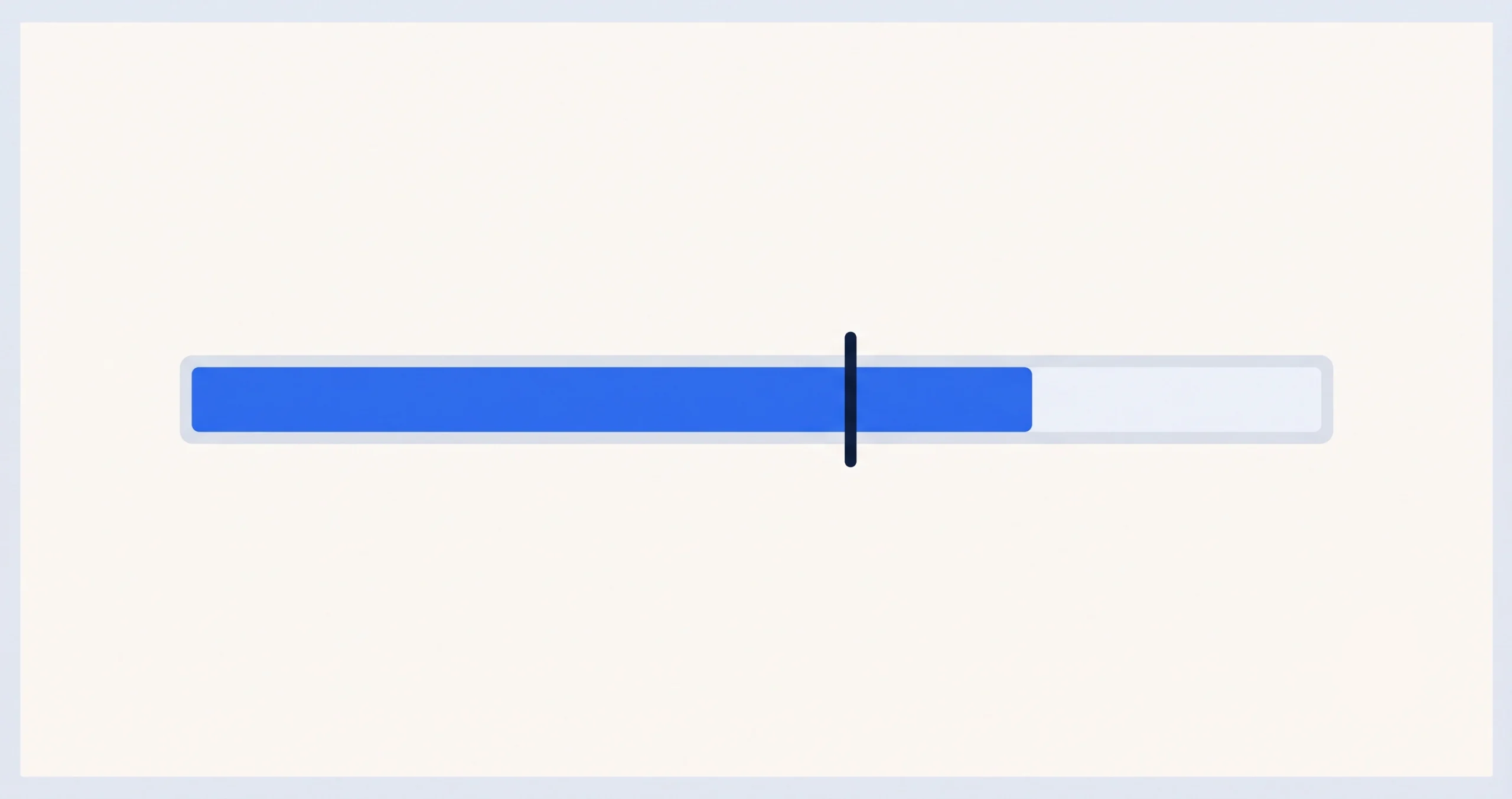
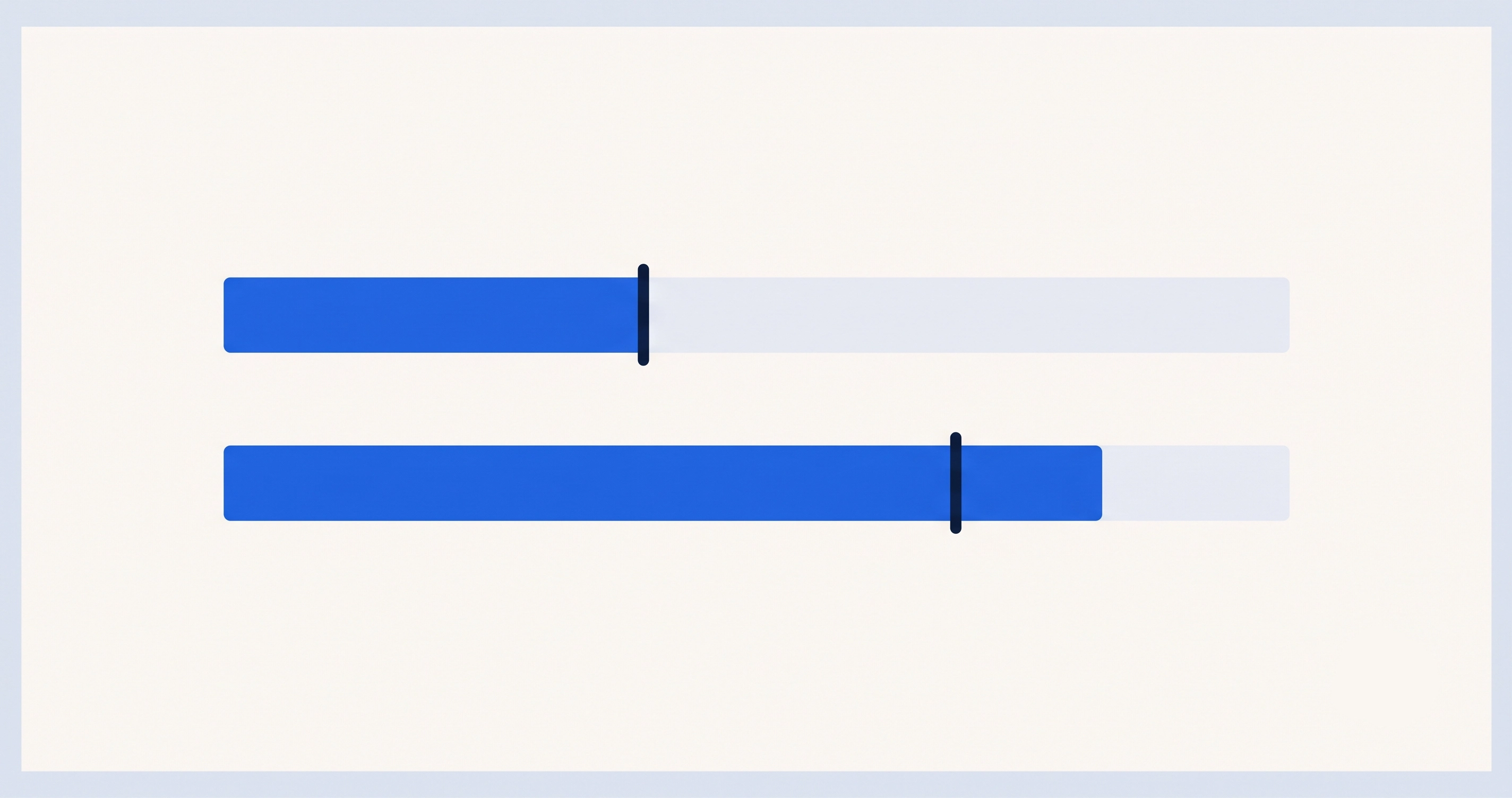
The 2026 thresholds, visually
Two separate numbers, measured on two separate time periods. Both have to hold at once.
Test 1 · Last year’s revenue (2025)
Must be €25,000 or under
Test 2 · This year’s revenue (2026), running total
Must stay €100,000 or under — a hard ceiling, not a forecast
Both figures are net (Nettoumsatz, revenue with VAT already excluded from the calculation) since the 1 January 2025 reform, which also replaced the old single-tier system: a flat €22,000 limit measured on gross revenue, with a separate €50,000 forecast for the current year that mattered far less in practice. The table below shows exactly what moved.
| Until end of 2024 | 2025 & 2026 (current) | |
|---|---|---|
| Prior-year limit | €22,000 | €25,000 |
| Current-year limit | €50,000 (a forecast) | €100,000 (a hard cap) |
| Measured on | Gross revenue | Net revenue |
| Cross the current-year limit mid-year? | Stayed exempt to year-end | VAT liable immediately |
Add or remove VAT the moment you need to
Our free VAT calculator adds or removes VAT at any rate, with standard-rate presets for Germany, the UK and 30+ countries, plus a full VAT-rate reference table. The day you cross the threshold, this is the tool that gets your first taxed invoice right.
Open the VAT calculatorThe hard €100,000 ceiling, worked through
This is the single biggest practical change to the Kleinunternehmerregelung from the old rules, and it catches people who read a summary instead of the actual mechanism. Under the pre-2025 system, the €50,000 figure was a forecast: if you honestly expected to stay under it, an unexpected late-year surge that pushed you over didn’t retroactively cost you anything until the following year. The €100,000 figure works completely differently. It’s measured continuously, and the moment your running total for the year crosses it, the exemption ends immediately, on that transaction, not at the next quarter or the next year.
A realistic example
- By the end of August, you’ve invoiced €95,000 this year
- In September you complete an €8,000 project and invoice for it
- €95,000 + €8,000 = €103,000, which is €3,000 past the ceiling
- Only that final €3,000 slice of the September invoice is taxable: 19% VAT on €3,000 is €570. The €5,000 below the ceiling, and everything invoiced before it, stays VAT-free
Everything you invoiced before that threshold-crossing sale keeps its exemption. Nothing is reassessed retroactively. But from that invoice onward, you’re issuing invoices as a regular VAT-registered business, which means your invoice template, your bookkeeping, and your filing obligations all change starting that week, not at a convenient calendar boundary. Watching your running total once you’re past roughly €80,000 for the year is genuinely worth doing by hand or in a spreadsheet, because the software you invoice through won’t necessarily warn you.
Starting a business partway through the year
New businesses get a special Kleinunternehmerregelung rule, and it only applies to one of the two thresholds. The €25,000 prior-year limit is prorated by the number of months you were actually trading in your first calendar year. Start in July, and you’ve only got six months of trading in year one, so your effective limit for that partial year is half of €25,000, which is €12,500.
The €100,000 current-year ceiling gets no such treatment. It applies in full, from day one, even if you only traded for a single month before the calendar year ends. A business that launches in November and does €90,000 of revenue in seven weeks is already close to a limit that a full-year business wouldn’t approach until autumn.
New since 2025: the exemption now works across the EU
Before 2025, the Kleinunternehmerregelung was strictly domestic. Sell to customers in France or the Netherlands as a small business, and Germany’s exemption did nothing for you there, you’d typically need to register for VAT separately in each country you sold into, a genuinely painful requirement for anyone doing freelance or consulting work across borders.
The reform introduced an EU-wide small business scheme alongside the new domestic thresholds. You register once with Germany’s Federal Central Tax Office (Bundeszentralamt für Steuern, BZSt), name the EU countries where you want the exemption applied, and receive a small business identification number (a “KU-IdNr.”) that starts with the country code. From there, the same basic logic applies in each participating country you’ve selected, without a separate local VAT registration in every one. There’s a separate EU-wide revenue ceiling of €100,000 across all your EU sales combined, on top of meeting each individual country’s own local threshold for that specific market.
Is the exemption actually worth using?
Qualifying for the Kleinunternehmerregelung and choosing to use it are two different decisions, since you can voluntarily opt into regular VAT taxation (a Verzicht) even while under the thresholds. Whether that’s the smarter move depends almost entirely on who buys from you and how much you spend to run the business.
| Situation | Kleinunternehmer status usually… |
|---|---|
| Mostly private (B2C) customers, low expenses | Helps. Your prices look 19% cheaper to people who couldn’t reclaim that VAT anyway. |
| Simple service business, minimal equipment | Helps. Almost nothing to lose by skipping input VAT you’d rarely reclaim. |
| Mostly business (B2B) customers | Costs nothing either way. VAT-registered clients reclaim the VAT you’d charge, so your price is identical to them regardless. |
| Investing in equipment, software, or inventory | Hurts. You pay VAT on every purchase and can never claim any of it back. |
Run the actual numbers before deciding. A business earning €20,000 with €4,000 of net expenses pays roughly €760 in VAT on those expenses that it can never reclaim as a Kleinunternehmer. That’s a real cost, not a rounding error, and it’s the exact number that a regular VAT-registered business in the same position would get back in full.
See where €25,000 or €100,000 actually lands you
If you’re weighing freelance income against a salaried offer, our German salary calculator and freelancer rate calculator show what either path actually nets you, with every 2026 rate cited to an official source.
German salary calculator Freelancer rate calculatorInvoicing correctly as a Kleinunternehmer
Invoicing under the Kleinunternehmerregelung needs to look genuinely different from a VAT-registered business’s, not just have a lower total. Leave VAT off the invoice entirely, no “0% VAT” line, since that implies a taxable transaction at a zero rate rather than a genuine exemption. Instead, include a short reference to the law itself, something like “Gemäß §19 UStG wird keine Umsatzsteuer berechnet” (no VAT is charged per §19 UStG). Skip this line and a Finanzamt reviewing your invoices has grounds to question why VAT is simply absent.
Frequently asked questions
Is the Kleinunternehmerregelung a legal form, like a GmbH?
No. It’s a VAT status based purely on revenue, layered on top of whatever legal form or income tax situation you already have as a Freiberufler or Gewerbetreibender. Qualifying for it says nothing about your income tax obligations, which are calculated completely separately.
What happens the exact month I cross €100,000?
You become VAT liable from the specific transaction that pushes your running total over the ceiling, not from the start of the month or the next filing period. Everything invoiced before that point keeps its exemption; everything from that transaction onward needs VAT added and reported in the normal way.
Can I voluntarily give up the exemption even if I qualify?
Yes, this is called a Verzicht, and it makes sense mainly if you have significant reclaimable input VAT or mostly business clients who don’t care about the VAT line either way. One catch: opting back into Kleinunternehmer status after a voluntary waiver typically means a 5-year lock-in before you can switch again, so it’s worth modelling a full year of numbers before deciding.
Do I include the VAT I would have charged when checking the €25,000 or €100,000 limits?
No. Since the 2025 reform, both thresholds are measured on net revenue, meaning the amount before VAT would have been added. This is a change from the old rules, where the single €22,000 limit was measured on gross revenue including VAT.
Does the exemption apply automatically, or do I need to register for it?
It applies automatically once you register as newly self-employed and your revenue sits under the limits; there’s no separate application. You can, however, actively opt out via a Verzicht if you’d rather be VAT-registered from the start.
This page explains how the exemption works; it isn’t tax advice for your specific situation. For anything beyond a straightforward single-income case, a Steuerberater or the official §19 UStG text should have the final word. Last reviewed August 2026. See how we review and our affiliate disclosure.