I’ve carried both in my pockets for years, sometimes literally at the same time, and I can tell you the iPhone vs Android argument has never been less about the phones and more about everything around them. The hardware gap closed a long time ago. What’s left in 2026 is a fight over AI assistants, update promises, ecosystems that don’t want to let you go, and prices that jumped this year for reasons that have nothing to do with either company’s ambition.
So this comparison skips the tribal stuff. No “Android had that feature in 2019” scorekeeping, no pretending one side is objectively correct. Instead: what each platform actually looks like in mid-2026 after the Galaxy S26 launch, the iPhone 17 generation, and Apple’s Siri AI reveal at WWDC in June, what everything costs now, and an honest answer to the only question that matters, which is who each phone is right for.
What’s in this comparison
- The short answer
- What actually changed in 2026
- Price and value: the year phones got expensive again
- Hardware and design
- Software: iOS 26 vs Android 16 (and what’s coming)
- The AI fight: Siri AI vs Gemini and Galaxy AI
- Cameras
- Updates and how long your phone lives
- Ecosystem and lock-in
- Messaging between the two, finally fixed (mostly)
- Privacy and security
- Resale value and the real cost of ownership
- Who should buy which
- What switching actually costs you
- FAQ
- Verdict
The short answer
If you own a Mac, an iPad, or an Apple Watch, buy an iPhone. The ecosystem pull is that strong and fighting it makes your life harder for no reward. If you want the most phone for the least money, more hardware variety, a foldable, or real control over how your device behaves, buy Android. If you’re somewhere in the middle, the honest tiebreakers in 2026 are AI (Google is ahead, Apple is closing fast), resale value (iPhone, clearly), and price (Android, at almost every tier).
Neither choice is wrong. Around 70% of the world runs Android and about 29% runs iOS, a split StatCounter’s numbers have shown barely moving for a decade, and both crowds seem perfectly happy. The rest of this article is the detail behind that summary, because the detail is where your specific answer lives.
What actually changed in 2026
Comparison articles love to pretend every year is a revolution. Most years aren’t. This one, though, brought more real movement than any I can remember since 2020, and it’s worth catching up before the category-by-category breakdown.
Samsung’s Galaxy S26 arrived in March with a price problem that isn’t Samsung’s fault. The S26, S26+ and S26 Ultra were announced at Unpacked on February 25 and hit stores March 11. The Ultra held its $1,299 starting price, but the base and Plus models got more expensive, and the higher storage tiers jumped hard, with the 1TB Ultra now at $1,799. The culprit is a global memory chip shortage that’s been squeezing every phone maker’s costs since late 2025, and it means the old advice of “just wait for the next generation, it’ll be the same price” quietly died this year. On the good-news side, the S26 Ultra brought a genuinely clever Privacy Display that narrows viewing angles automatically when you type passwords, a main camera that pulls in about 47% more light, and Galaxy AI features that finally feel less like demos.
Apple’s iPhone 17 generation, from last September, was the strongest base-model refresh in years. The standard iPhone 17 finally got the 120Hz ProMotion display Apple had gatekept behind Pro pricing forever, at the same $799. The bigger story was the iPhone Air at $999, an absurdly thin phone that traded battery capacity for the kind of design people stop you on the street about. The 17 Pro moved to $1,099 and the Pro Max to $1,199. iOS 26 shipped alongside them with the Liquid Glass redesign, the biggest visual overhaul iOS has had in over a decade, and people are still arguing about it.
Then June happened. At WWDC on June 8, Apple announced iOS 27 and, finally, the Siri rebuild everyone had been waiting three years for. It’s called Siri AI, it’s contextually aware, it can see what’s on your screen, and Apple built it with help from Google and Nvidia, which tells you everything about how seriously Apple is taking the gap. The public beta lands in July and the full release comes this fall alongside the iPhone 18 generation, which is widely reported to include Apple’s first folding iPhone. One catch that matters for readers here in Europe: Siri AI won’t be available in the EU at launch because of regulatory constraints, which stings.
Google, meanwhile, keeps shipping. Android 16 has been the stable base all year, the Pixel 10 family with the Tensor G5 chip has been the AI benchmark since last August, and Android 17 is already in the pipeline showing off features like Pause Point for screen time. Gemini is woven so deeply into Pixels and Galaxies now that it’s less an assistant and more the operating system’s second brain.
Put together: prices up, AI everywhere, foldables about to stop being an Android exclusive. That’s the 2026 backdrop. Now the categories.
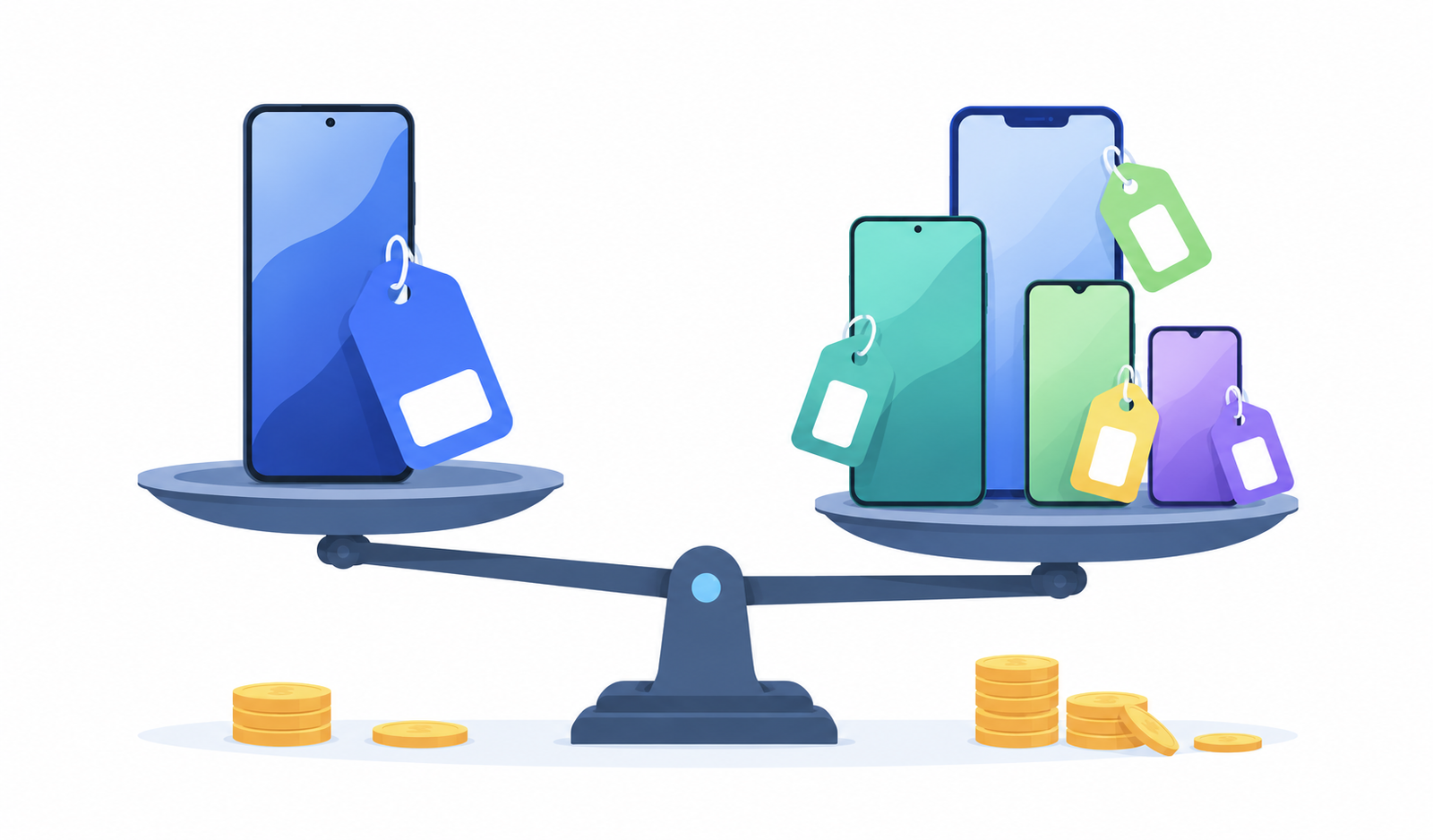
Price and value: the year phones got expensive again
Android has always won on entry price and still does, but the memory shortage reshuffled the middle of the market this year, so here’s where things actually stand in mid-2026.
| Tier | iPhone | Android |
|---|---|---|
| Cheapest sensible entry | iPhone 16e from $599; solid used iPhone 14/15 for $350–$500 | Genuinely good phones from $150–$400 (Moto G line, Galaxy A series); Pixel A-series around $499 |
| Mainstream flagship | iPhone 17 at $799, now with the 120Hz display it always deserved | Pixel 10 at $799; Galaxy S26 costs more than its predecessor did after this year’s price bump |
| Big flagship | iPhone 17 Pro $1,099; Pro Max $1,199 | Galaxy S26 Ultra from $1,299 (256GB), $1,499 (512GB), $1,799 (1TB); Pixel 10 Pro XL $1,199 |
| Something different | iPhone Air at $999, the thin one; no folding iPhone yet (reported for late 2026) | Flip-style foldables from about $1,099; book-style folds around $1,999 |
Read that table and two things jump out. First, Android’s range is simply wider. There is no $200 iPhone and there never will be, while a $250 Android in 2026 is a perfectly usable phone with a decent camera. Second, at the top end the price gap has inverted: a maxed-out Galaxy S26 Ultra now costs more than a maxed-out iPhone, which would have sounded like a typo five years ago.
Sticker price isn’t the whole story though, and this is where iPhone people have a legitimate counterargument that I’ll get to properly in the resale section. Short version: iPhones lose value much more slowly, so the total cost of owning one over three years is closer to Android than the launch prices suggest. But if your budget is $400 today, that’s an Android conversation, full stop.
Hardware and design
For a decade this section wrote itself: Android had variety, iPhone had polish. Both halves are still true, but the interesting stuff now lives at the edges.
The iPhone Air is the most opinionated piece of hardware Apple has shipped in years. It’s so thin it feels like a prop, battery life takes a real hit for it, and people buy it anyway because it feels like the future in your hand. Meanwhile the 17 Pro models are dense, heavy, thermally serious devices built around the A19 Pro chip, which still takes the single-core performance crown, not that you’d notice in normal use. Every phone at this level is fast. Benchmarks are for forum arguments now.
On the Android side, the S26 Ultra is the kitchen-sink champion: a 6.9-inch LTPO display under Gorilla Armor 2 that shrugs off reflections, an S Pen in the chassis, four cameras, and Qualcomm’s Snapdragon 8 Elite Gen 5, which trades blows with Apple’s silicon and wins on multi-core. Samsung also finally added proper magnetic accessory support this generation, so the magnetic charger and wallet ecosystem iPhone people have enjoyed since 2020 isn’t exclusive anymore.
And then there’s the category Android still owns outright: foldables. Flip phones for people who want small, book-style folds for people who want a tablet in their pocket. Samsung is on its seventh generation and the software finally matches the hinge. Apple’s first fold is reportedly months away, and its arrival will be the biggest hardware story of the fall, but as of today, if you want a folding phone, you want Android. That sentence has an expiry date and everyone knows it.
One quiet win for the whole industry: USB-C on everything, hardware switching costs near zero. Your cables, your chargers, and increasingly your magnetic accessories work on both sides of the fence.
Software: iOS 26 vs Android 16, and what’s coming this fall
iOS 26’s Liquid Glass redesign made iPhones look genuinely different for the first time since 2013, all translucency and depth, and the reaction split exactly how you’d expect: designers loved it, half of Reddit wanted the old look back. iOS 27, arriving this fall, keeps the design and adds a transparency slider for the people it gave headaches to, which is Apple’s way of admitting the complaints had a point. Beyond looks, iOS 27’s list is long and practical: AI photo editing that can reframe a shot after the fact, Safari organizing your tab chaos by topic, a Passwords app that can go replace your weak passwords by itself, separate volume for alarms (finally), and Markdown in Notes.
Android 16 with Material 3 Expressive is the most visually confident Android has ever been, and the customization gap remains real even after Apple’s improvements. Any launcher, any default app, real widgets anywhere, sideloading, actual file system access. iOS lets you recolor icons and rearrange your home screen more freely than before, and for most people that’s plenty, but if you have opinions about how your phone should behave, Android is still the only platform that fully respects them.
My honest take after living with both this year: iOS feels more finished, Android feels more mine. Which of those sentences sounds better to you is basically the whole decision.
The AI fight: Siri AI vs Gemini and Galaxy AI
This is the section that would have been three sentences in 2022 and is now the main event.
Google is ahead, and it isn’t particularly close yet. Gemini on a Pixel 10 or Galaxy S26 is woven through the whole system: it summarizes anything on screen, handles multi-step requests across apps, edits photos with a sentence, and surfaces information before you ask through features like Samsung’s Now Nudge. Galaxy AI added some legitimately impressive tricks this year, like Audio Eraser cleaning up sound in videos across YouTube and Instagram, and a Creative Studio that turns rough sketches and text prompts into usable graphics. Some of Samsung’s advanced AI features are heading toward paid tiers eventually, which nobody loves, but the free layer is generous.
Apple spent two years getting embarrassed about this, and WWDC in June was the counterpunch. Siri AI, announced with iOS 27, is contextually aware, understands what’s on your screen, handles text, audio, images and video, and was built with Google’s and Nvidia’s help, a partnership Apple would never have admitted to needing five years ago. The demos looked strong. The catch is timing: it ships this fall, the best on-device models need the newest iPhones with 12GB of RAM (iPhone Air and the 17 Pro models), and EU users don’t get Siri AI at launch at all thanks to regulatory friction. Apple Intelligence’s quieter tools, the writing help, Clean Up in Photos, live translation, have matured into things people actually use, and the new Reframe and Extend photo editing in iOS 27 is the first Apple AI feature I’ve seen Android owners openly envy.
Where that leaves you: if AI features are a top-three reason you’re buying a phone in mid-2026, Android delivers today. If you’re an iPhone person, the honest advice is that the gap closes significantly this fall, sight unseen promises deserve skepticism, but the direction is unmistakable. And if you’re in the EU, factor in that both companies now ship their newest AI toys here late or not at all.
Cameras
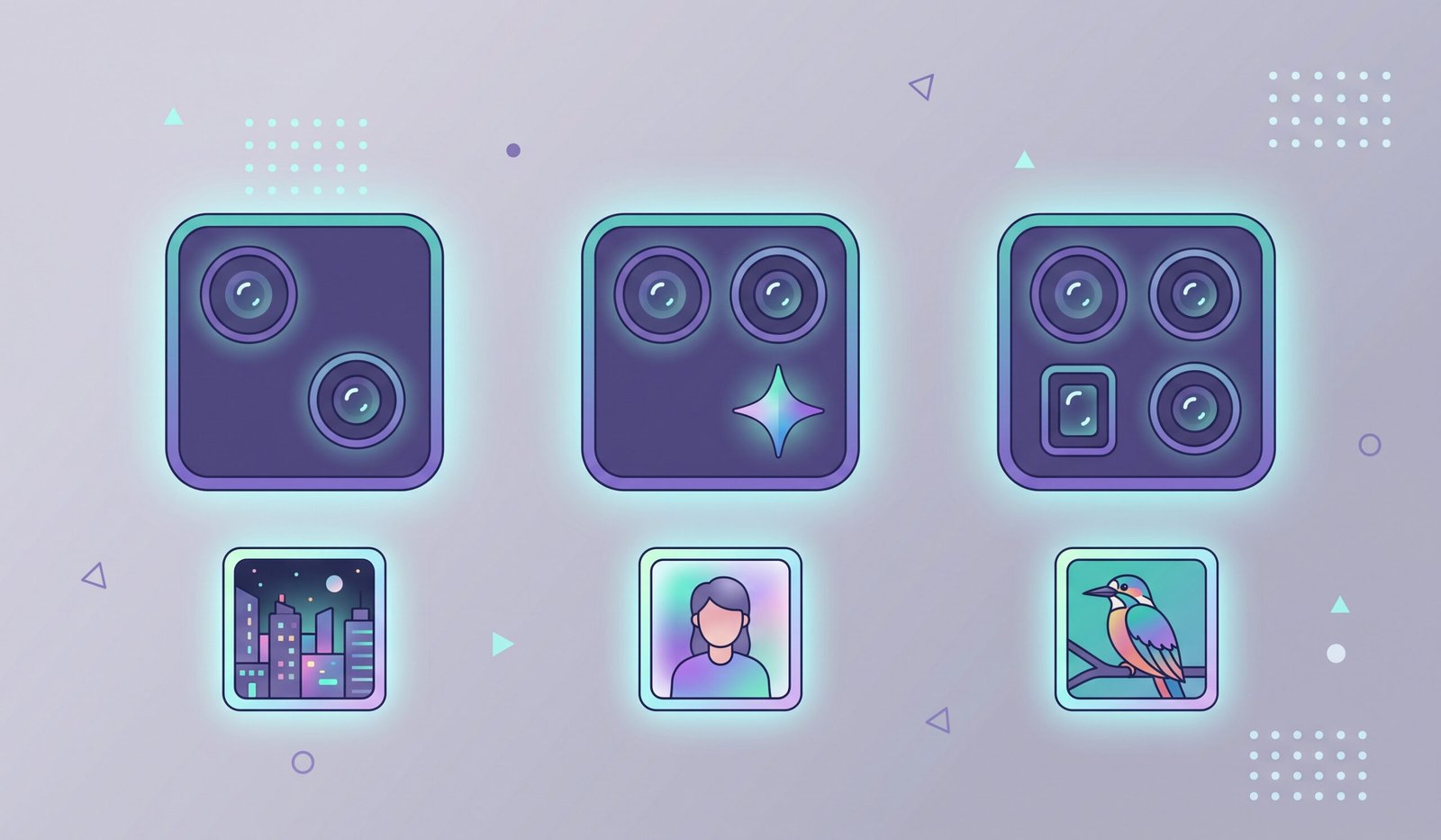
Every phone above $600 takes photos that would have been flagship-grade three years ago, so the differences now are about style and specialty, not quality.
iPhones remain the video kings. If you shoot moving pictures, the 17 Pro’s combination of stabilization, color consistency, and pro formats is still what most creators default to, and there’s a reason half of the short-form video you watch was filmed on one. iPhone stills lean natural: accurate skin tones, restrained processing, what-you-saw-is-what-you-get.
Pixels are the computational photography benchmark. Night shots, automatic fixes, the ability to erase a stranger from your photo or pick the best face from a burst, Google’s processing does more thinking per shot than anyone. Some people find the results slightly too perfect. Most people find them great.
Samsung owns zoom and versatility. The S26 Ultra’s quad-camera setup, with its 200MP main sensor now drinking in 47% more light and a 5x periscope, covers more focal lengths than anything Apple sells, and this year’s Super Steady video with horizon lock plus support for the new APV pro video format shows Samsung finally taking video as seriously as stills. Its processing still runs vivid, the sky a bit bluer than it was, which is either a flaw or a feature depending on your Instagram feed.
So the camera question isn’t “which is better.” It’s what do you shoot? Video: iPhone. Low light and effortless point-and-shoot: Pixel. Zoom, flexibility, and one phone for every situation: the S26 Ultra. Anyone declaring a single overall winner here is selling something.
Updates and how long your phone lives
This category quietly decides how much your phone really costs, and it’s the one where Android fixed its historic weakness, at the top of the market anyway.
| Maker | Update promise | The reality check |
|---|---|---|
| Apple | No formal number published | Six-plus years in practice; iOS 27 still reaches iPhones sold years ago, delivered to everyone worldwide on day one |
| Google Pixel | 7 years of OS and security updates | The promise is real and updates arrive first, since Google makes the OS |
| Samsung flagships | 7 years on Galaxy S series | Matches Google on paper; major One UI versions land a few months after Pixels get the new Android |
| Samsung A-series and other mid-rangers | Roughly 4–6 years depending on model | Good but check the specific phone before buying, the range is wide |
| OnePlus, Motorola, budget brands | Anywhere from 1 to 4 OS updates | This is where “Android has bad updates” is still true; a cheap phone abandoned in 18 months is no bargain |
The takeaway: buy an iPhone, a Pixel, or a Galaxy flagship and longevity is a solved problem, seven years covers anyone’s ownership horizon. Buy a random $230 Android and you’re on your own by 2028. The update policy belongs on your spec checklist right next to the camera, and on cheap Androids it’s the spec most worth paying a little extra for.
Ecosystem and lock-in
Here’s where I stop pretending to be neutral, because the data isn’t: over 90% of iPhone owners buy another iPhone, and the ecosystem is the reason.
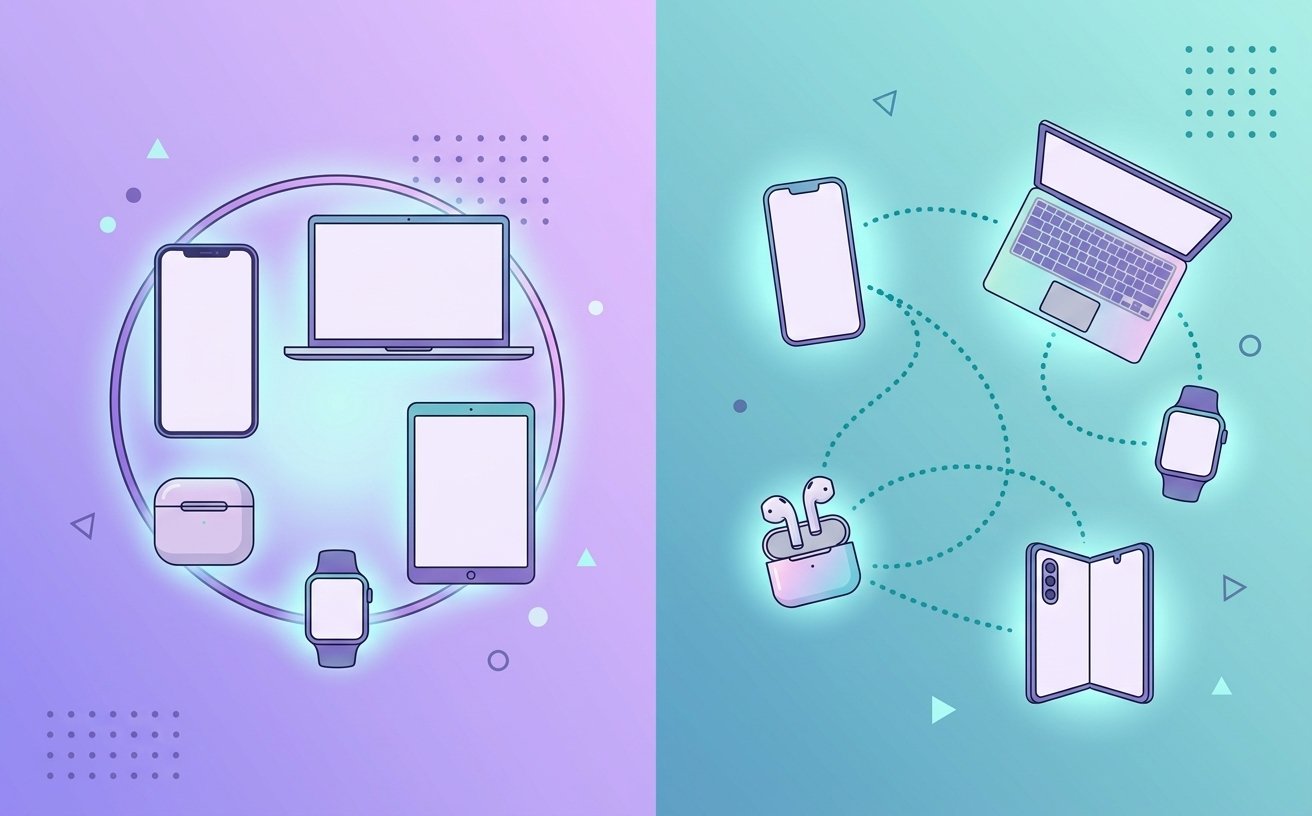
If you have a Mac, AirDrop moves files instantly, your iPhone becomes the webcam, texts and calls follow you to every screen, and your Watch unlocks everything. Apple’s official iPhone page sells this integration hard because it’s genuinely the product. The individual features have Android equivalents. The sum doesn’t, because Apple controls every piece and the pieces were designed together.
Android’s ecosystem story is better than it used to be and messier than Apple’s. Go all-in on Google, a Pixel, Pixel Buds, a Chromebook, and the cross-device experience is close. Go all-in on Samsung, Galaxy phone, Buds, Watch, tablet, a Windows PC with Phone Link, and it’s arguably richer than Apple’s in spots, DeX desktop mode being the party trick iPhones still can’t answer. The mess appears when you mix: a Pixel with Galaxy Buds and a random Windows laptop works fine, but “fine” is the ceiling. The upside of Android’s looser ecosystem is the same as its downside: nothing locks you in, so nothing holds you tight.
Messaging between the two, finally fixed (mostly)
For years the worst thing about owning an Android in an iPhone country was the green bubble: crushed photos, broken group chats, social punishment in certain American group threads. That era is genuinely ending. iPhones have supported RCS since iOS 18, which means texting between platforms now gets high-resolution photos and videos, typing indicators, read receipts, and group chats that don’t fall apart, and end-to-end encryption for cross-platform RCS is rolling out under the updated standard. iOS 27 even opens iCloud Shared Albums to Android and Windows contributors, which would have been unthinkable from Apple a few years back.
The bubbles are still green, and in the US that still carries social weight I won’t pretend away, teenagers did not get the interoperability memo. Everywhere else on the planet this entire issue was always solved by WhatsApp anyway. If messaging compatibility was your reason to pick iPhone, that reason is mostly gone in 2026.
Privacy and security
The structural difference hasn’t moved: Apple sells hardware, Google sells advertising, and every privacy decision downstream flows from those business models. App Tracking Transparency, on-device processing for sensitive requests, and a tightly reviewed App Store mean an iPhone leaks less about you by default, before you touch a single setting. That default matters, because almost nobody touches the settings.
What’s changed is that Android’s ceiling is now very high for people willing to reach for it. Pixels get security patches instantly, Google’s Privacy Sandbox reworked how ad tracking functions, and Samsung’s new Privacy Display on the S26 Ultra physically narrows the screen’s viewing angle when you type a password, a hardware privacy feature Apple doesn’t have an answer to. Android also lets you compartmentalize in ways iOS can’t, right down to installing entirely de-Googled systems on some phones, though at that point you’ve left the mainstream conversation.
Security-wise, both platforms are hard targets in 2026, and the honest risk ranking for a normal person is: phishing first, reused passwords second, platform choice a distant third. iPhone by default, Android by effort, and either one beats the password “123456” you’re still using somewhere.
Resale value and the real cost of ownership
Launch prices lie. What a phone costs you is what you paid minus what you sell it for, and this is the most lopsided category in the whole comparison.
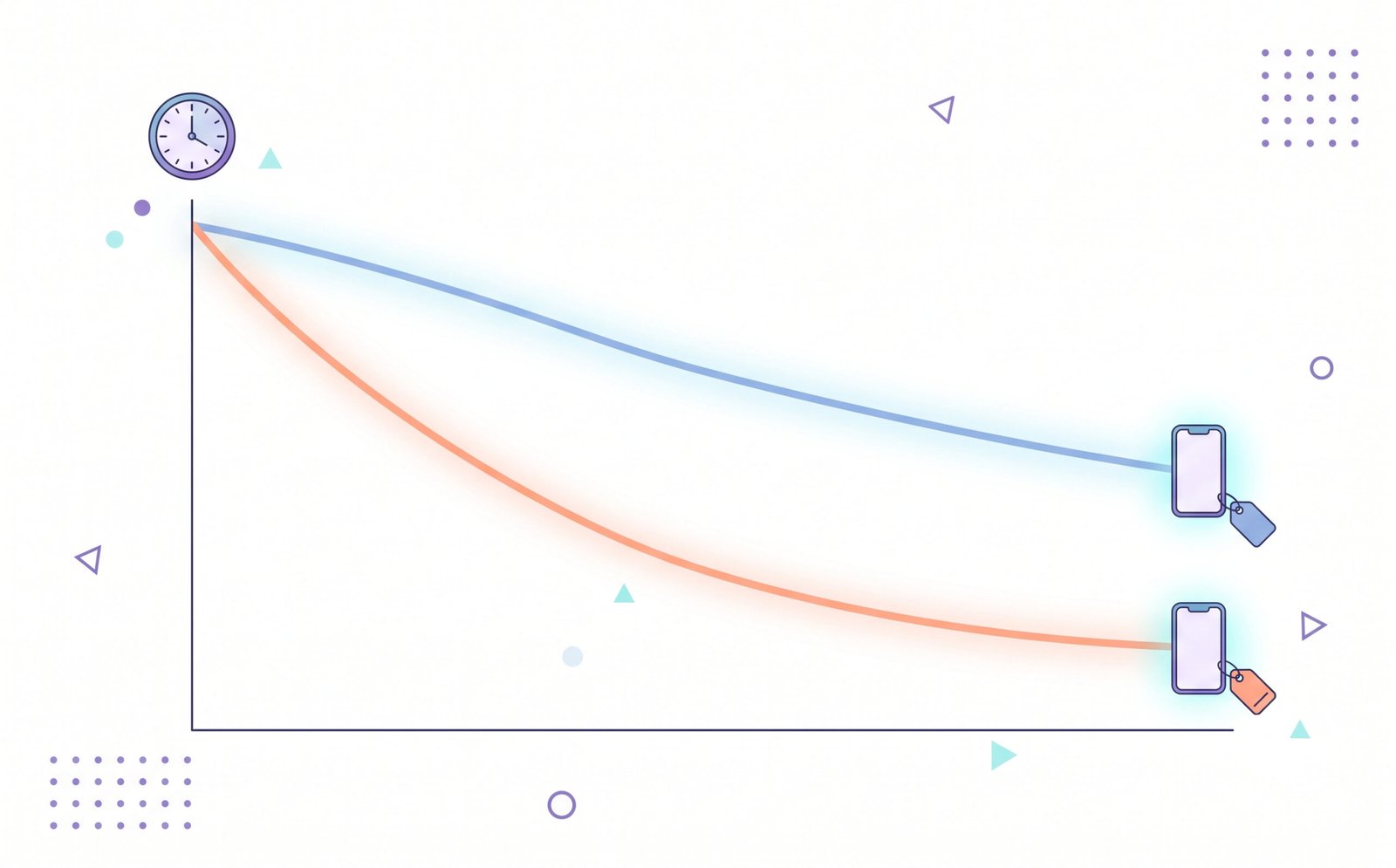
SellCell’s January data made it brutal: Samsung’s S23 generation lost about half its value within six months of launch, and roughly 55% inside a year. iPhones bleed value at a fraction of that pace, which is why a two-year-old iPhone still sells for real money while a two-year-old Android flagship is a clearance item. Run the math over a three-year cycle and a $1,099 iPhone 17 Pro can genuinely cost less to own than a cheaper Android flagship, because so much of the price comes back at trade-in time.
Android’s counterargument works from the other side of the transaction: terrible depreciation is fantastic news for buyers. That barely-used S25 Ultra someone traded in is now a monster phone at a mid-range price, and the used and refurbished Android market is the best value in all of tech right now. So the resale rule of 2026 is simple. Buying new to keep or flip later: iPhone economics win. Hunting maximum phone per dollar on the used market: Android is where the bargains live.
Who should buy which
Forget team loyalty and answer honestly which paragraph sounds like you.
Buy an iPhone if you already live with a Mac, iPad or Apple Watch, you shoot a lot of video, you want strong privacy without configuring anything, you keep phones for many years and want day-one updates the whole time, or resale value matters to your upgrade math. It’s also still the low-decision option: every iPhone is good, so choosing takes five minutes.
Buy an Android if your budget lives under $500, you want a foldable this year rather than whenever Apple ships one, AI features are a genuine priority today, you like tinkering with launchers, defaults and automation, or you simply refuse to pay ecosystem rent. Android in 2026 also means real choice: the pragmatic Pixel, the maximalist Galaxy Ultra, flips, folds, and a hundred options between $150 and $1,800 on Google’s official Android site and beyond.
The platform matters less than the specific phone. A Pixel 10 will make you happier than a $180 no-name Android, and an iPhone 16e will make you happier than a five-year-old Pro Max on its last legs. Within each camp the quality spread is enormous, so compare phones, not religions.
What switching actually costs you
Less than it used to, more than the ads admit. The transfer tools on both sides move your photos, contacts, messages and most apps in an afternoon, and USB-C killed the cable problem. The real costs are stickier: paid apps don’t transfer between stores, so you’ll rebuy a few favorites. Your smartwatch almost certainly doesn’t cross over, an Apple Watch is an iPhone accessory, period, and Galaxy Watches lose features off Samsung phones. WhatsApp chats move between platforms fine now; iMessage history does not follow you to Android. And group-chat social dynamics, if you live in a green-bubble-hostile country, are the one switching cost no transfer tool fixes.
My rule of thumb: switching platforms costs you roughly $100–$200 in rebuys and accessories plus a weekend of setup. If you’re switching because of one annoying feature, don’t bother. If the other platform’s whole philosophy fits you better, that price is nothing across the five to seven years your next phone will live.
Frequently asked questions
Which is better in 2026, iPhone or Android?
Neither, universally. iPhone wins on ecosystem integration, video recording, default privacy, resale value, and update simplicity. Android wins on price range, hardware variety, foldables, customization, and AI features available today. The better phone is the one whose strengths match what you actually do; both platforms are excellent in 2026.
Is iPhone or Android more popular?
Globally, Android runs about 70% of smartphones versus roughly 29% for iOS, and that split has been stable for years. The United States flips it, with iPhone around 58 to 60 percent, and Japan leans Apple too, while markets like India run over 90% Android. iPhone owners are also more loyal, with over 90% buying another iPhone.
What are the newest iPhone and Android flagships right now?
As of mid-2026, Apple’s lineup is the iPhone 17 ($799), the thin iPhone Air ($999), and the 17 Pro and Pro Max ($1,099 and $1,199), all from September 2025, with the iPhone 18 generation and a widely reported first folding iPhone expected this fall. On Android, the Galaxy S26 series launched in March 2026 with the Ultra starting at $1,299, and the Pixel 10 family has anchored Google’s lineup since last August.
Is Siri finally as good as Google’s Gemini?
Not yet, but the gap is about to shrink. Apple announced Siri AI at WWDC in June 2026, a rebuilt assistant with on-screen awareness and multimodal understanding, shipping with iOS 27 this fall. Gemini and Galaxy AI are ahead today and available now, while Siri AI needs recent hardware for its best features and won’t launch in the EU initially.
Do iPhones really last longer than Android phones?
Against the average Android, yes; against the right Android, no. Apple supports iPhones for six-plus years in practice, and Google and Samsung now promise seven years of updates on Pixels and Galaxy flagships. Budget Androids remain the weak spot, with some getting only one or two updates, so on cheap phones the update policy is the spec to check first.
Can iPhone and Android text each other properly now?
Mostly, yes. iPhones support RCS, so cross-platform texts get high-quality photos and video, typing indicators, read receipts, and stable group chats, with end-to-end encryption rolling out under the updated RCS standard. The bubbles stay green, but the practical problems are largely solved, and outside the US most people text over WhatsApp anyway.
Is it hard to switch from Android to iPhone or the other way?
The data transfer is easy; both platforms have solid migration tools that move photos, contacts, and messages in an afternoon. The friction is elsewhere: repurchasing paid apps, replacing a smartwatch that doesn’t cross platforms, and losing iMessage history if you leave Apple. Budget around $100–$200 and a weekend, and only switch for philosophy, not for one feature.
Verdict
After a year of carrying both, here’s where I land. The iPhone is the better appliance: it asks nothing of you, holds its value, and fits perfectly into a life that already contains Apple hardware. Android is the better tool: cheaper at every tier, more shapes, more control, and the stronger AI story today. In 2026 the platforms are closer in quality than they’ve ever been and further apart in philosophy, which means the old question “which phone is best” has quietly become “which kind of owner are you.” Answer that, buy the best phone in that camp your budget allows, and then, this is the important part, stop reading comparison articles and enjoy the thing. It’s a phone. Both of them are terrific.