Revolut review 2026: is the free account worth it?
I’ve run my money through Revolut’s free Standard plan for years, including a stretch of living in Poland while my banking stayed in Germany. This is the review I wish I’d read before signing up: what the free account actually includes, the exact exchange and ATM rules, where the catches hide, and a step-by-step on opening one. Plus a transparency note about referral links that most blogs conveniently skip.
The short answer
Revolut’s free Standard plan is the best zero-cost tool I know for moving money between countries and currencies. Weekday exchanges happen at the interbank rate, the one banks use with each other, with no markup up to 1,000 euros a month. Euro transfers across the SEPA zone are free. Transfers to other Revolut users are free and instant anywhere in the world. During my years splitting life between Germany and Poland, it saved me more money than any other single app on my phone, and it never charged me a monthly fee for the privilege.
It is not a full replacement for your main bank account, and I’ll be blunt about why: you can’t deposit cash, support lives entirely in a chat window, exchanges on weekends cost 1%, and the compliance system occasionally freezes accounts while it asks questions. Revolut works best as a powerful second account next to a boring primary one, a setup I covered in detail in my online banks vs traditional banks comparison.
Verdict in one line: for travel, cross-border transfers and multi-currency spending, the free plan is worth it in every possible way. As your only account, it isn’t, and Revolut itself seems to know that.
Best at
Cross-border transfers, holding 25+ currencies, spending abroad at the real exchange rate.
Costs
Nothing monthly. Watch the 1,000 euro exchange allowance, the weekend 1%, and ATM limits.
Weak spots
No cash deposits, chat-only support, occasional compliance freezes.
Use it as
A second account beside your main bank. That combination is hard to beat.
What Revolut is in 2026 (and yes, it’s a real bank now)
Revolut started in London in 2015 as a prepaid travel card with unusually honest exchange rates. Eleven years later it has more than 60 million customers worldwide and has grown into something closer to a financial everything-app: current accounts, cards, savings, stock and ETF investing, crypto, budgeting tools, kids’ accounts, even eSIM data plans. Not all of that deserves your attention. The core of it does.
The “is it a real bank” question, which haunted Revolut for years, has a clear answer in the EEA: yes. Revolut Bank UAB is a licensed bank headquartered in Lithuania, authorised by the European Central Bank and supervised by the Bank of Lithuania. In Germany it operates through a Berlin branch that BaFin oversees, and since late 2024 it has been issuing proper German IBANs to German customers, having passed two million of them that year. Eligible deposits are protected up to 100,000 euros per depositor by the Lithuanian deposit guarantee scheme, the same EU-mandated standard your local bank follows, just administered from Vilnius instead of your home country. More on the nuances in the safety section.
One structural detail worth understanding early: the banking part is a bank, but the investing, crypto and commodities parts run through separate Revolut companies with their own licences and no deposit insurance. The app blends them into one smooth interface. Your legal protections don’t blend, and I’d rather you know that on day one.
Where you can sign up
Revolut accepts new personal customers who live in these countries and territories, per its official supported-countries list:
- All 30 EEA countries: Austria, Belgium, Bulgaria, Croatia, Cyprus, Czech Republic, Denmark, Estonia, Finland, France, Germany, Greece, Hungary, Iceland, Ireland, Italy, Latvia, Liechtenstein, Lithuania, Luxembourg, Malta, Netherlands, Norway, Poland, Portugal, Romania, Slovakia, Slovenia, Spain and Sweden
- Rest of Europe: United Kingdom and Switzerland
- Worldwide: United States, Australia, New Zealand, Singapore, Japan and Brazil
- Overseas territories: Isle of Man, Jersey, Guernsey and the British Indian Ocean Territory, plus the French territories of French Guiana, Guadeloupe, Martinique, Mayotte, Reunion and Saint Martin
Mexico sits on a waiting list ahead of its 2026 launch, and waitlists have opened in markets like India and Ecuador. Canada remains absent after a brief early attempt, and mainland China and Hong Kong aren’t served. If your country isn’t on the list, you can still receive money from Revolut users, you just can’t hold an account. For a country-by-country breakdown and decent alternatives if you’re not eligible, the regularly updated Revolut availability guide at Investing in the Web is the best single page I’ve found.
A note for movers, because this bit is underrated: your Revolut account travels with you. When I relocated to Poland, I updated my address in the app and kept the same account, cards and balances. Try doing that with a branch bank and you’ll be filling out forms for a month.
The free Standard plan, in full
Revolut sells four paid tiers, and the app will remind you of that fact regularly. Ignore the upsell for now. Here is everything the free Standard plan includes, and it’s more than most paid bank accounts I’ve held:
- A full current account with an IBAN (a German one for German customers on the local branch, Lithuanian otherwise, both SEPA-valid) that can receive salary and pay direct debits
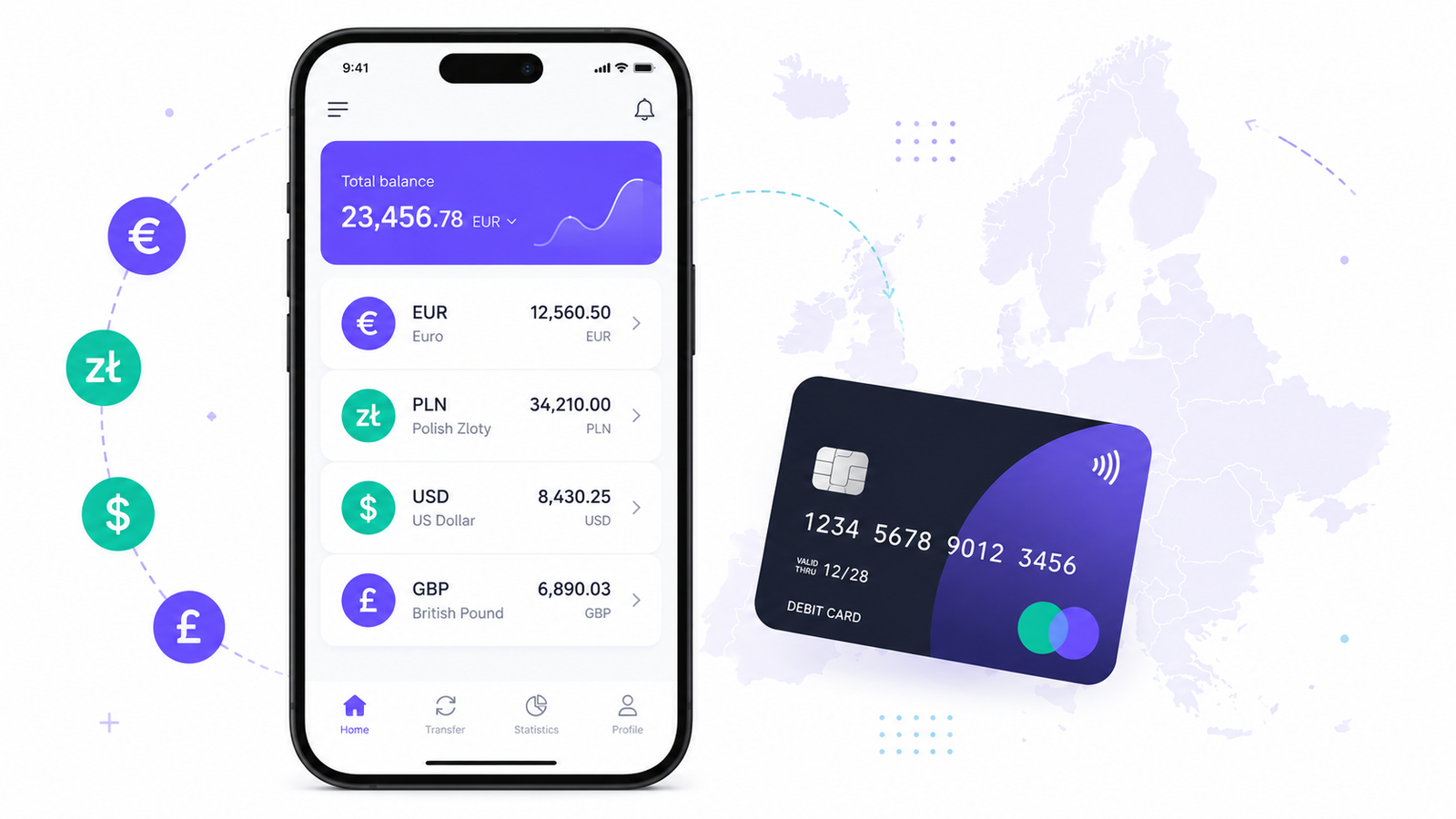
- Holding and exchanging 25+ currencies in one place, at the interbank rate on weekdays within the fair-usage allowance
- Free and instant transfers to any Revolut user, anywhere in the world
- Free euro SEPA transfers and free domestic transfers in your base currency
- A virtual card that works immediately, a disposable virtual card that regenerates its number after every online purchase, and a free physical Visa or Mastercard (delivery fee applies)
- ATM withdrawals free up to 200 euros or five withdrawals per rolling month
- Budgeting analytics, spending categories, subscription tracking and bill splitting
- Pockets (sub-accounts) for separating rent, travel or savings goals
- Instant push notifications for every transaction, card freeze, location security and gambling or magstripe blocks you control yourself
- Joint accounts, accounts for kids and teens under a parent’s control, and access to the savings and investing products (with their own terms)
The honest framing: the free plan is not a teaser, it’s the actual product, and Revolut makes its money from paid tiers, interchange and the extras. For a typical user who travels a few times a year and sends the occasional international transfer, Standard covers 95% of it. I know because I’ve never upgraded, and not for lack of the app suggesting it.
My Germany-to-Poland years on the free plan
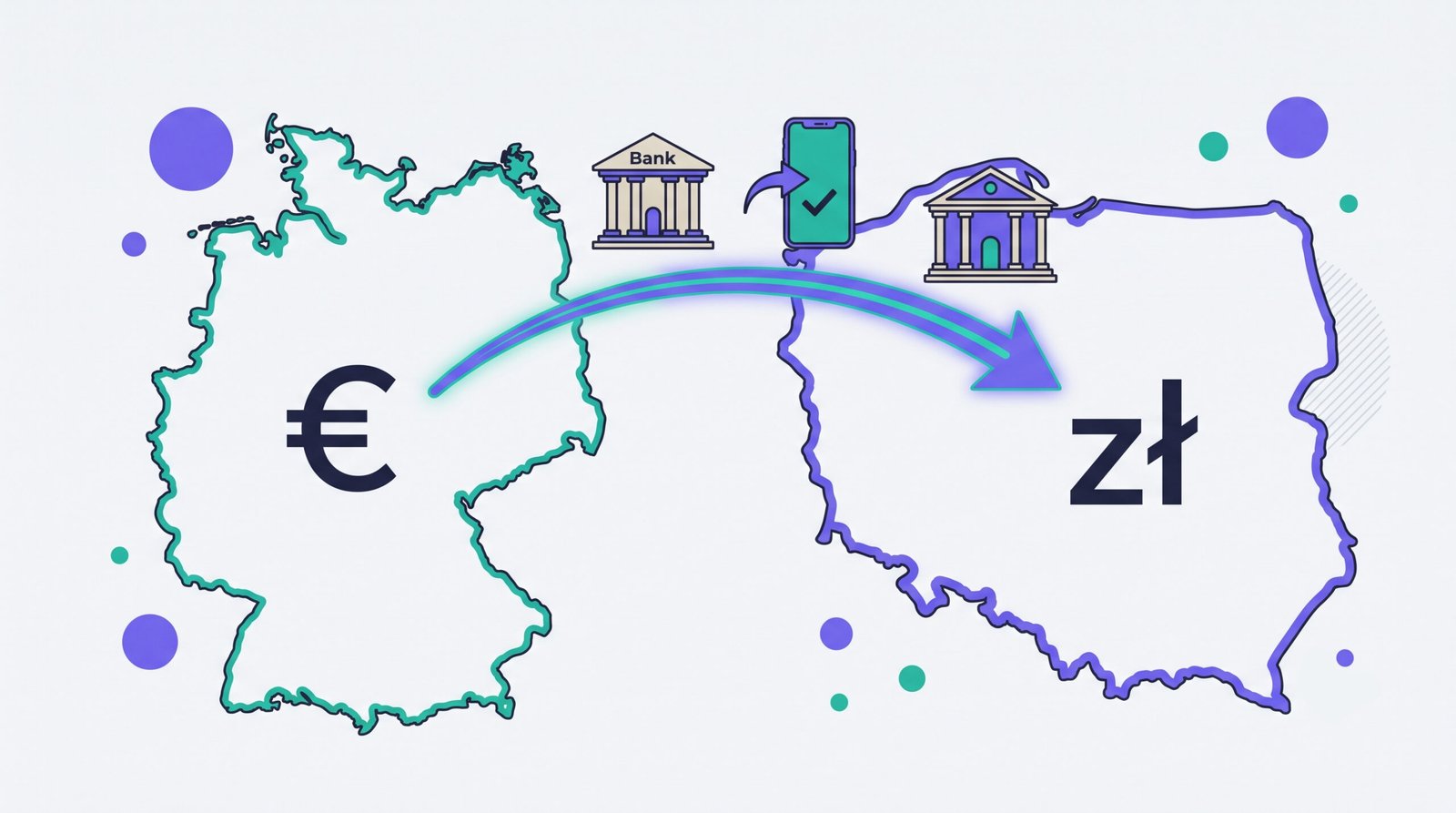
Reviews are cheap without skin in the game, so here’s mine. I’ve been on the free individual plan for years, and the stretch that turned me from user into advocate was the time I lived in Poland while my income and main banking stayed in Germany. Every month I needed euros from a German account to become zloty in a Polish one, and every classic route for that is either slow, expensive or both. A traditional international transfer means SWIFT fees and a padded exchange rate. Currency exchange offices mean marching around town with cash. Revolut made the whole problem quietly disappear.
The routine took about three minutes: I topped up my Revolut balance instantly from my Commerzbank account, which cost nothing, then converted euros to zloty and sent the money to a Polish bank account. The top-up was free and immediate. The euro-to-zloty conversion cost a small amount, and I mean genuinely small: within the monthly allowance on a weekday it’s the interbank rate with no markup at all, and even when a fee applied it was pocket change next to what a bank wire plus its exchange spread would have taken. Money I sent in the morning was spendable in Poland the same day. Rent, utilities, a plumber who wanted a bank transfer: all handled from a sofa in another country.
Two habits I picked up that I’ll pass along. First, I did my conversions on weekdays, because the weekend fee is real and entirely avoidable with a calendar. Second, I converted in sensible monthly chunks rather than drip-feeding tiny amounts, which kept me comfortably inside the fair usage allowance and made the whole month effectively free. Neither habit required effort. Both required knowing the rules, which is what the next section is for.
Currency exchange: the exact rules that decide what you pay
This is the engine of the whole product, so it deserves precision rather than marketing language. Three rules govern what an exchange costs you on the free plan:
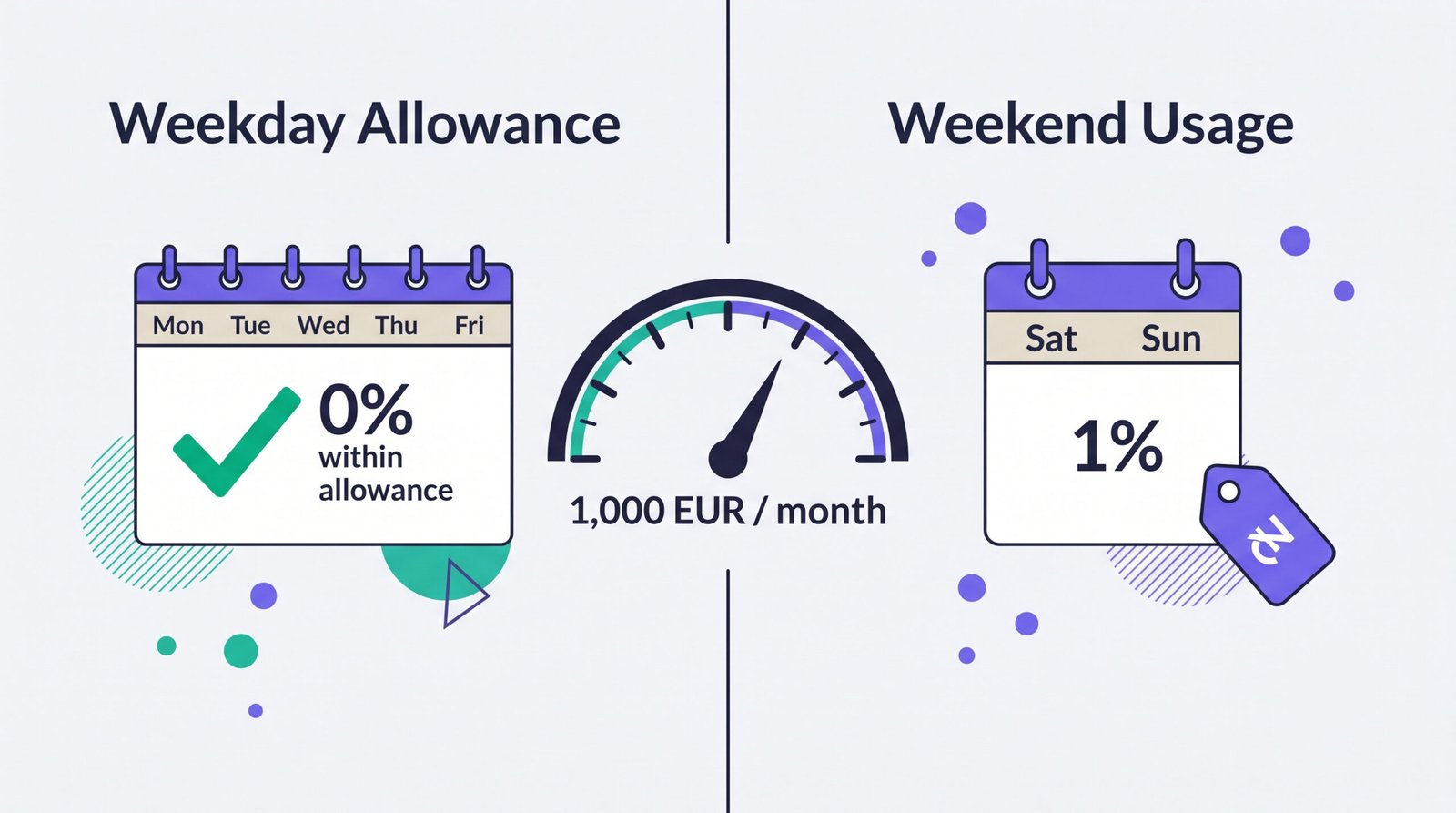
Rule one: weekdays are free, up to a point. From Sunday evening to Friday evening (New York market hours, since currency markets set the rhythm), Revolut exchanges at the interbank rate with no markup, as long as you’re within your fair usage allowance. That allowance on the Standard plan is 1,000 euros or equivalent per rolling month in Germany, and it covers all exchange types combined, currencies, crypto and commodities alike.
Rule two: above the allowance, a small percentage applies. In Germany that’s currently 0.5% on the amount above 1,000 euros; the UK and France run 1%, and other countries sit in the same neighborhood. Exchange 1,500 euros worth in a month here and the first 1,000 is free, the last 500 costs you 2.50 euros. Annoying, not ruinous, and the app shows the fee before you confirm anything.
Rule three: weekends cost 1%. Between Friday 5pm and Sunday 6pm New York time, every exchange on the free plan carries a 1% fee, because the underlying markets are closed and Revolut covers its rate risk by charging you. Since April 2025, Premium, Metal and Ultra customers pay nothing on weekends and Plus pays 0.5%, which tells you exactly which behavior the pricing wants to change. My solution costs nothing: convert on Thursday.
The rates themselves update live in the app, and the exact numbers for your country live on Revolut’s official Standard plan fees page, which I’d bookmark, because fee pages change more often than blog posts do. Card payments abroad follow the same logic: pay in the local currency, let Revolut convert, and on a weekday within your allowance the exchange rate on your coffee in Prague is the same one Deutsche Bank gets on the interbank market. That sentence is the entire reason this app has 60 million customers.
Every fee on the free plan (the honest list)
“Free account” claims deserve an audit, so here is every way the Standard plan can cost you money, collected in one table. Figures are for Germany as of July 2026; other countries differ slightly in the details, never in the shape.
| Item | Free plan cost | How to avoid it |
|---|---|---|
| Monthly account fee | 0 € | Nothing to avoid |
| Top-up by bank transfer | Free | — |
| Top-up by EEA-issued card | Free | Non-EEA and commercial cards may carry a small fee |
| Exchange, weekday, within 1,000 €/month | Free, interbank rate | — |
| Exchange above the allowance | 0.5% on the excess (DE) | Spread large conversions across months, or upgrade |
| Exchange on weekends | 1% | Convert Monday to Friday |
| SEPA euro transfers | Free | — |
| Transfers to Revolut users | Free, instant, worldwide | — |
| SWIFT transfers outside SEPA | Fee varies, shown before sending | Use Revolut-to-Revolut or local rails where possible |
| ATM withdrawals | Free up to 200 € or 5 withdrawals/month, then 2% (min 1 €) | Withdraw less often, in larger amounts |
| Physical card | Card free, delivery fee applies | Use the virtual card in Apple/Google Pay meanwhile |
| Replacement card | ~6 € plus delivery | Don’t lose it, easier said than done |
| Cash or cheque deposits | Not supported at any price | Keep a traditional account for cash |
Compare that against a conventional German current account, where 4 to 10 euros a month is normal before you’ve done anything, and the value question mostly answers itself. The fees that exist are behavioral: they charge impatience (weekend conversions), heavy cash habits (ATM limits) and bulk currency trading (the allowance). Ordinary use slips between all three.
Sending money abroad: what’s actually free and what isn’t
Since cross-border transfers are the reason I keep recommending this account, let me map the routes properly, from cheapest to priciest:
- Revolut to Revolut: free and instant, anywhere. If the person you’re paying also has the app, the transfer behaves like a text message. This alone is worth the download for families spread across countries.
- Euro to any SEPA account: free. The Single Euro Payments Area covers 40+ countries, so paying a euro invoice in Spain from Germany costs nothing and typically lands within hours, often instantly.
- Currency conversion plus local transfer: nearly free. My Poland route. Convert on a weekday within your allowance at the interbank rate, then send zloty to a Polish account. The only possible cost is the conversion fee if you’re over the allowance or it’s a weekend.
- SWIFT transfers outside these rails: a real fee. Sending dollars to a US bank or currency to a country outside the cheap networks goes over SWIFT, and Revolut charges for it like everyone does. The app shows the exact cost before you hit send, which is more than my old bank ever managed, but this is not where Revolut shines. For heavy SWIFT corridors, compare with a dedicated transfer service first.
The pattern to internalize: inside Europe and inside the Revolut network, transfers are essentially a solved problem on the free plan. Outside those, Revolut is merely okay, and knowing the difference before you send is worth more than any single feature.
Everyday features worth actually using
The app ships more features than anyone needs. These are the ones that earned a permanent place in how I handle money, and the ones I’d switch on in your first week:
The disposable virtual card. A card number that destroys itself after every online purchase. Sketchy webshop, free trial you’ll forget to cancel, a site you’ll never visit again: this card makes the stored-credentials problem irrelevant, because the number they stored is already dead. Of everything Revolut makes, this is the feature I’d miss most.
Instant notifications with real controls. Every transaction buzzes your phone as it happens, which turns fraud detection into something you do passively. And the card controls are genuinely granular: freeze and unfreeze in one tap, block online payments, block magstripe swipes, block gambling merchants entirely. My physical card stays frozen between uses. Costs nothing, removes a whole category of worry.
Pockets and analytics. Sub-accounts that ring-fence rent or travel money before you can spend it, and a monthly breakdown that categorizes spending automatically. It won’t replace a proper budget for people who love spreadsheets, but for everyone else it’s the budget they’ll actually look at. The subscription tracker alone found two forgotten services I’d been paying for. I won’t say which. It’s embarrassing.
Bill splitting and payment requests. Group dinner, shared holiday house, that one friend who “forgot”: send a request, they tap, done. Works best when your circle is on Revolut too, which, in most European friend groups by 2026, they are.
Savings, investing and the extras (a measured word)
Revolut wants to be where all your money lives, so the app also offers interest-bearing savings, stock and ETF investing from one euro, crypto, commodities and even eSIM data plans. A quick, honest tour rather than a brochure:
Savings are the most useful extra. German-branch customers get instant-access savings with interest tied to the European Central Bank’s base rate, paid out daily, with the exact percentage varying by plan and by the ECB’s mood. Daily payouts are a small psychological delight, and for parking a travel fund the product is perfectly good. For your main emergency fund, compare rates first; dedicated online savings banks sometimes pay more, a comparison I ran in the online vs traditional banks guide.
Investing covers stocks and ETF savings plans, including commission-free ETF plans from one euro for European customers, run through Revolut’s separate securities entity. Fine as a low-friction way to start. Just remember the structural point from earlier: investments are not deposits, carry market risk, and sit outside the 100,000 euro guarantee.
Crypto and commodities run through yet other entities, crypto under an EU MiCA licence from Cyprus and commodities through an unregulated UK company, both stated plainly in the small print. I own my bias here: I use Revolut for money movement, not speculation, and this review rates the bank, not the casino attached to it. If you do trade, know that these exchanges eat into the same monthly fair-usage allowance as your currency conversions.
Is Revolut safe? The licence, the 100,000 euro question, and the honest caveats
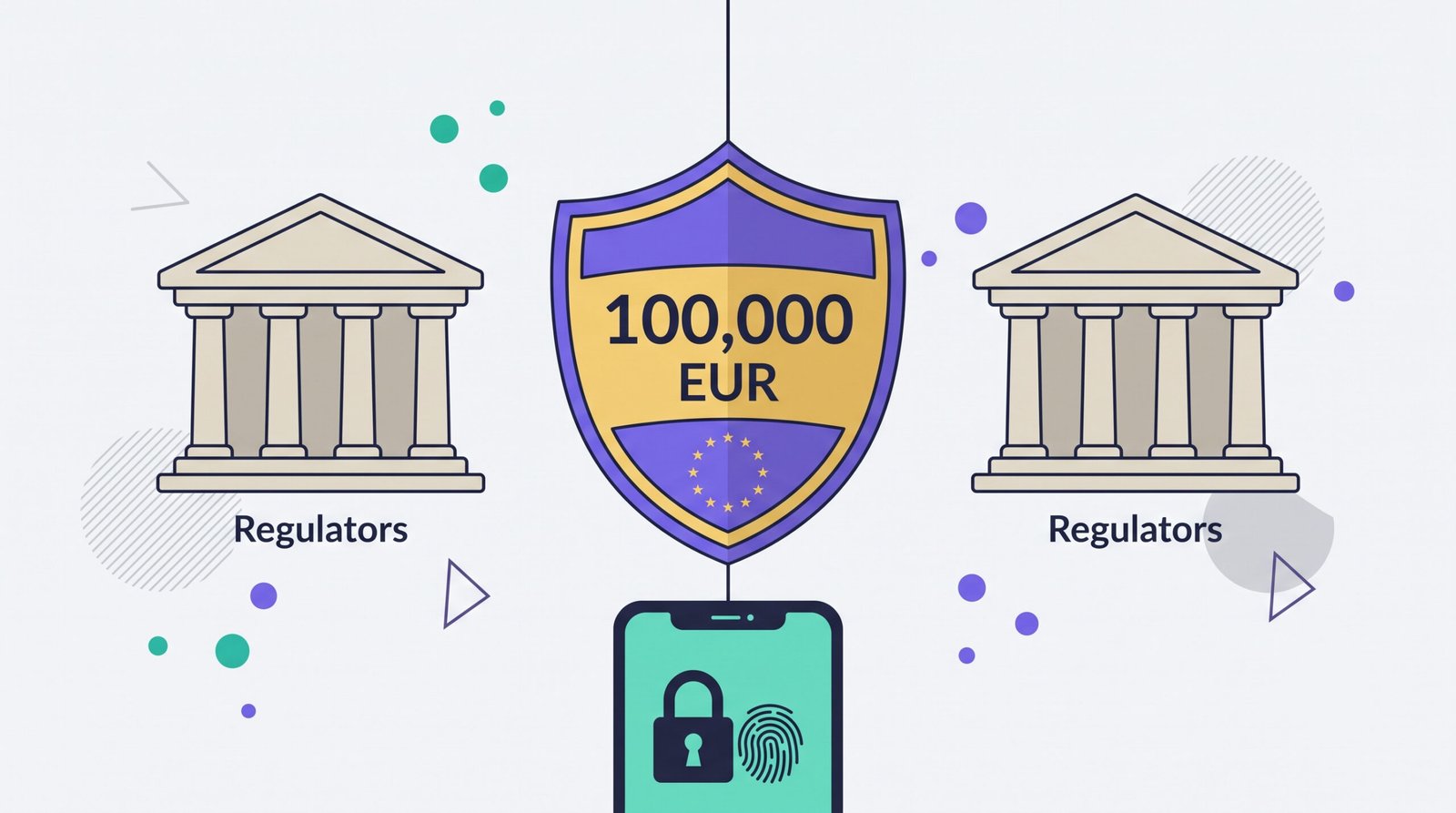
The structural answer first. In the EEA, Revolut is a licensed bank authorised by the European Central Bank, supervised by the Bank of Lithuania, with the German branch also overseen by BaFin and the Bundesbank. Eligible deposits are protected up to 100,000 euros per depositor by Lithuania’s statutory deposit guarantee scheme. That is the same EU directive standard behind every German, French or Dutch bank; the guarantee fund simply sits in Vilnius rather than Berlin. For balances under six figures, the protection is functionally equivalent to any local bank, and anyone telling you otherwise is selling something.
Day-to-day security is genuinely strong: biometric login, device binding, instant freeze, disposable cards, location-based security checks, and notifications that make unauthorized transactions visible within seconds. Revolut’s fraud tooling exists because the company grew up online, where the attacks are.
Now the caveats, because a review without them is an advertisement:
- Account freezes happen. Anti-money-laundering rules force every bank to freeze and investigate suspicious patterns, and Revolut applies them algorithmically and at scale. Most customers never see one. The unlucky ones can wait days or weeks while documents are reviewed, with only the chat window for company. It’s the loudest complaint category, and it’s the main reason my salary lands elsewhere first.
- Support is chat-only. Good for the routine, thin for a crisis. There is no branch, no local phone line with a human who can override the queue.
- Not everything in the app is a deposit. Investments, crypto and commodities carry their own risks and no deposit insurance, no matter how smoothly the interface blends them with your account balance.
- Scammers love popular apps. Instant transfers are instant in both directions. Revolut blocks a lot, but no bank refunds money you were tricked into sending willingly, so the usual skepticism about urgent strangers applies double.
My practical rule after years of use: keep the balance you’d keep in a wallet plus your active transfer money in Revolut, keep your financial life’s foundations at an institution where a human can fix an identity problem, and enjoy the best of both. Safety isn’t a yes/no question. It’s an architecture question, and a two-account architecture answers it well.
Revolut vs your main bank: complement, not replacement
Should Revolut replace your bank account? For most people, no, and I say that as someone who recommends the app in the same breath. The two do different jobs. Your traditional bank (or a chartered online bank) does cash, in-person problem solving, lending relationships and the “financial address” role that landlords and payroll departments trust without questions. Revolut does currencies, borders and speed better than any of them.
A few German employers and landlords still side-eye non-DE IBANs despite SEPA rules forbidding it, which the German branch rollout is steadily fixing, but “steadily” is doing some work in that sentence. And since Revolut takes no cash deposits at all, anyone with cash income needs another account by definition.
So the setup I actually run, and the one I’d suggest: main account at a boring bank, Revolut beside it for everything international, an instant top-up bridging the two whenever needed. If you want the full reasoning, numbers and the two-account architecture spelled out, that’s exactly what my online banks vs traditional banks: which wins in 2026 guide covers. Revolut is the strongest “second account” on the market. That’s not faint praise. The second account is where all the interesting things happen.
Paid plans: when upgrading actually makes sense
Revolut’s German pricing ladder runs Standard (free), Plus at 2.99 euros, Premium at 8.99 euros, Metal at 15.99 euros and Ultra at 65 euros a month. The app promotes them enthusiastically. Here’s the unenthusiastic version:
| Plan | Price (DE) | The actual reason to buy it |
|---|---|---|
| Standard | 0 € | Everything in this review. The right plan for most people. |
| Plus | 2.99 €/mo | Purchase protection and a halved weekend fee. Thin value; skip unless a promo bundles something you want. |
| Premium | 8.99 €/mo | No exchange allowance, no weekend fees, higher ATM limits, travel perks. Pays for itself if you exchange well over 1,000 € monthly or convert on weekends a lot. |
| Metal | 15.99 €/mo | Premium plus travel insurance, bigger limits and a heavy card. For frequent travelers who’d buy insurance anyway. |
| Ultra | 65 €/mo | Lounges, global data, bundled subscriptions. A lifestyle product; do the arithmetic on the bundle before believing it. |
The break-even math is simple enough to do on a napkin. Premium at roughly 108 euros a year makes sense once your out-of-allowance and weekend exchange fees would exceed that, which starts around 1,800+ euros of monthly exchanging or heavy weekend habits. Below that, Standard plus a Thursday calendar reminder outperforms every paid tier. I’ve done the napkin annually for years. Standard keeps winning.
Who should open one, and who shouldn’t
Get the free account without much deliberation if you:
- Live, work, study or split time across more than one country, the case where Revolut goes from useful to indispensable
- Travel even a couple of times a year and are tired of your bank’s 1 to 3% foreign transaction markup
- Send money to family or friends abroad, especially within Europe or to other Revolut users
- Shop on international websites and want the disposable-card safety net
- Get paid by foreign clients as a freelancer and want to receive multiple currencies without a specialist account
Skip it, or wait, if you:
- Deal in cash regularly, since there is no way to deposit it, full stop
- Want one single account for everything including in-person service; that’s not this product
- Live outside the supported countries (check the list above)
- Would be tempted by the trading screens into speculating money you can’t spare; the app makes it very, very easy
Notice what’s absent from the first list: any requirement to be a finance person. My least technical relatives use it for exactly one thing, sending money home for free, and that single use justifies the ten-minute signup. We track the wider category in our financial product reviews if you’re weighing alternatives.
How to open a Revolut account (10 minutes, honestly)
The signup is the smoothest I’ve seen from any financial product, which is worth something in a country where opening a bank account can still involve an appointment and a PostIdent queue. The whole thing happens in the app:
- Check your country. One glance at the supported list. Residents of the EEA, UK, Switzerland, US, Australia, New Zealand, Singapore, Japan and Brazil are in.
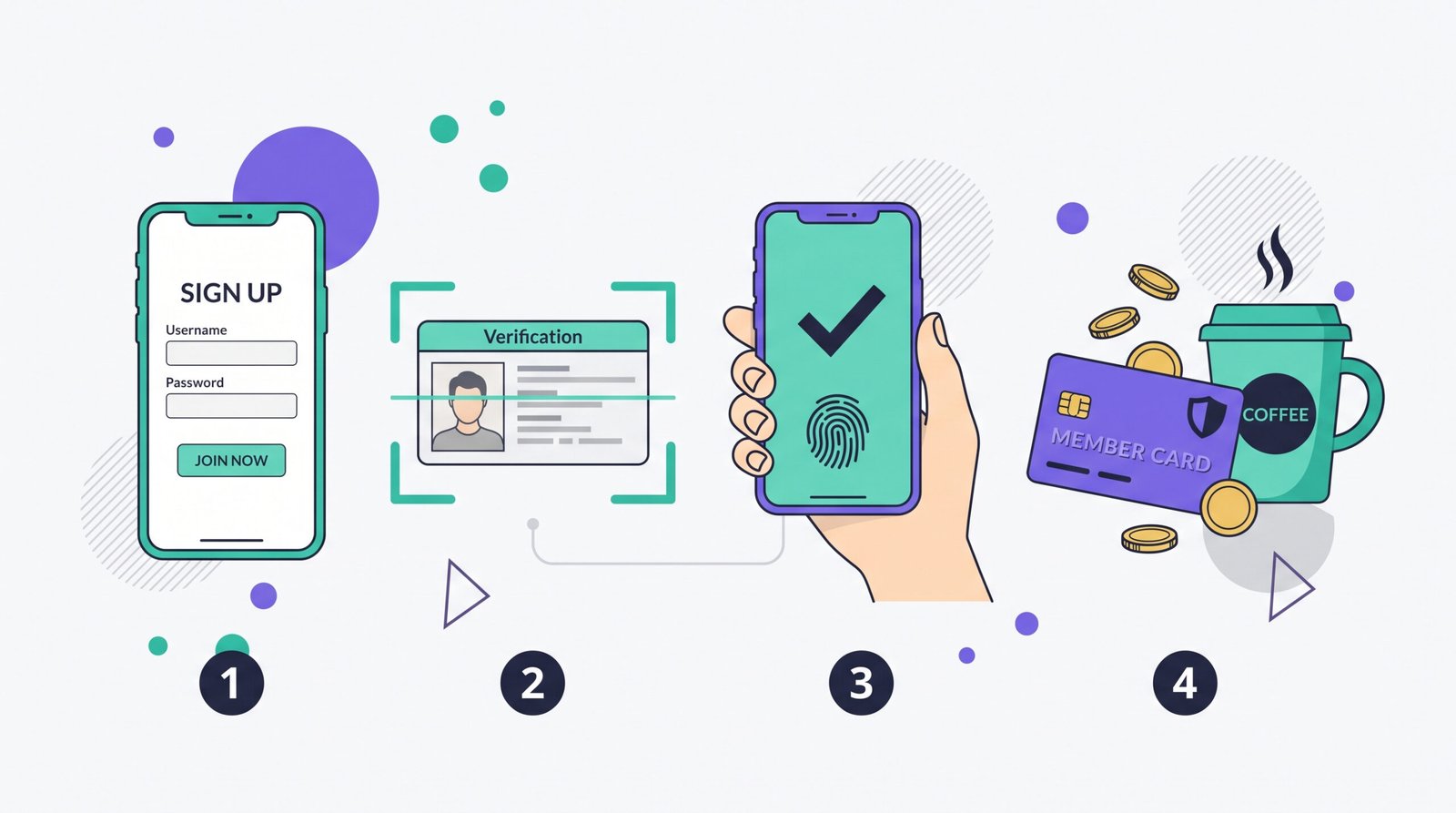
- Download the app and register your number. Enter your phone number, type the confirmation code, set a passcode. Two minutes.
- Fill in personal details. Name, date of birth, home address, and depending on your country a tax identification number. Have it handy rather than hunting for it mid-flow.
- Verify your identity. Photograph your passport, national ID card or residence permit, then record the short selfie video the app walks you through. Do it in decent light with a clean document. Approval typically lands in minutes; a day or two at busy times is normal, not a bad sign.
- Top up. Bank transfer (free), or instantly by debit card, Apple Pay or Google Pay. EEA-issued personal cards are free to top up with. This is the step where my Commerzbank top-ups happen, and “instant” means instant.
- Use the virtual card now, order the plastic one for later. The virtual card drops straight into Apple Pay or Google Pay and works immediately. The physical Standard card is free apart from a delivery fee; order it if you’ll withdraw cash or want a backup for terminals that refuse phones.
- Set up the useful bits. Copy your IBAN for anyone who’ll pay you, add the currencies you’ll hold, create a pocket or two, and enable every notification. Five more minutes, and the account is genuinely ready.
No paperwork, no branch visit, no waiting for a letter. If your verification does get stuck, the in-app chat resolves the routine cases; unclear document photos cause most of them.
My referral link, and the fine print most blogs hide
Here’s the part where finance blogs usually get quiet, so let me be loud about it instead. Below is my Revolut referral link. If you open your account through it and complete the qualifying steps, Revolut may pay me a reward, up to 100 euros depending on the campaign running at the time. You, under Revolut’s current referral terms, receive nothing. No bonus, no discount, no free month. I think that’s a weak policy on Revolut’s part, referral programs used to reward both sides and the good ones still do, but it’s their program and those are the rules.
So why use my link at all? Only one honest reason: if this review saved you research time and you’d like to say thanks at zero cost to yourself, the link is a way to do it. The account, the fees and every feature described on this page are identical whether you sign up through my link, through revolut.com directly, or through the app store. Nothing in this review was shaped by the referral, and the criticisms above should make that plausible.
Five things people still get wrong about Revolut
“Revolut isn’t a real bank.” It was true once, and the internet never updates. In the EEA, Revolut has operated under a full banking licence for years now, ECB-authorised, with the standard 100,000 euro deposit guarantee. The claim survives on forums the way all obsolete facts do: confidently.
“The free plan is bait and the real product is paid.” I’ve used Standard for years without upgrading once, through a two-country life, and the math still favors free for anyone exchanging under four figures a month. The paid tiers solve real problems for heavy users. They are not a tax the rest of us secretly pay.
“You need the paid plan to avoid exchange fees.” On weekdays, within the monthly allowance, the free plan gets the same interbank rate as Ultra. The paid difference is limits and weekends, not the rate itself.
“Your money is less protected than at a normal bank.” Deposits carry the identical EU guarantee standard, administered by Lithuania. What genuinely differs is service architecture: chat instead of branches, algorithms instead of a branch manager. That’s a service trade-off, not a protection gap, and it’s why I run the two-account setup rather than avoiding the app.
“It’s only for travelers.” Travel is the gateway, but the daily winners are the disposable online card, the instant free transfers between friends, the subscription tracker and the one-tap freeze. I use Revolut more in an average boring month at home than on any trip.
FAQ
Is Revolut a real bank?
In the EEA, yes. Revolut Bank UAB is a licensed bank authorised by the European Central Bank and supervised by the Bank of Lithuania, with its German branch also overseen by BaFin. Eligible deposits are protected up to 100,000 euros per depositor through the Lithuanian deposit guarantee scheme. The investing, crypto and commodities features run through separate Revolut entities and sit outside deposit insurance.
Is the free Revolut account really free?
The plan has no monthly fee, and normal use stays free. The boundaries: exchanges at the interbank rate are free on weekdays up to 1,000 euros per rolling month (a small percentage applies above that), weekend exchanges cost 1%, ATM withdrawals are free up to 200 euros or five per month, and the physical card is free apart from delivery. The full list is in the fees table.
Which countries can sign up?
All 30 EEA countries, the UK, Switzerland, the US, Australia, New Zealand, Singapore, Japan and Brazil, plus several UK and French overseas territories. Mexico is on a waitlist ahead of its 2026 launch, with waitlists also open in markets like India and Ecuador. Canada is not supported.
Can I receive my salary into Revolut in Germany?
Yes. The German branch issues German IBANs to new customers and is migrating existing ones, which makes salary, direct debits and utilities painless. Older accounts on Lithuanian IBANs are fully SEPA-valid too, though the occasional German payroll office still grumbles about non-DE IBANs, illegally, but grumbling all the same.
How long does verification take?
Usually minutes after you photograph your ID and record the selfie check; busy periods can stretch it to a day or two. Good lighting, an undamaged document and matching personal details prevent nearly all delays.
Do I get a bonus for using a referral link?
Under the current terms, no, and I’d rather tell you plainly: the referrer can earn up to around 100 euros, the new customer gets nothing. Full details in the transparency section. The account itself is identical however you sign up.
Is Revolut good for sending money to Poland and other EU countries?
Excellent, and it’s my main use case. Euro SEPA transfers are free, Revolut-to-Revolut is free and instant worldwide, and converting euros to zloty on a weekday within the allowance happens at the interbank rate. From a German bank account to a Polish one, the whole route takes minutes and costs at most a small conversion fee.
Still unsure? Ask us
A fee you can’t decode, a country situation this guide didn’t cover, or a Revolut alternative you want reviewed next: send it over. This guide gets updated from real questions.