6 surprising truths about credit cards in Germany every expat needs to know
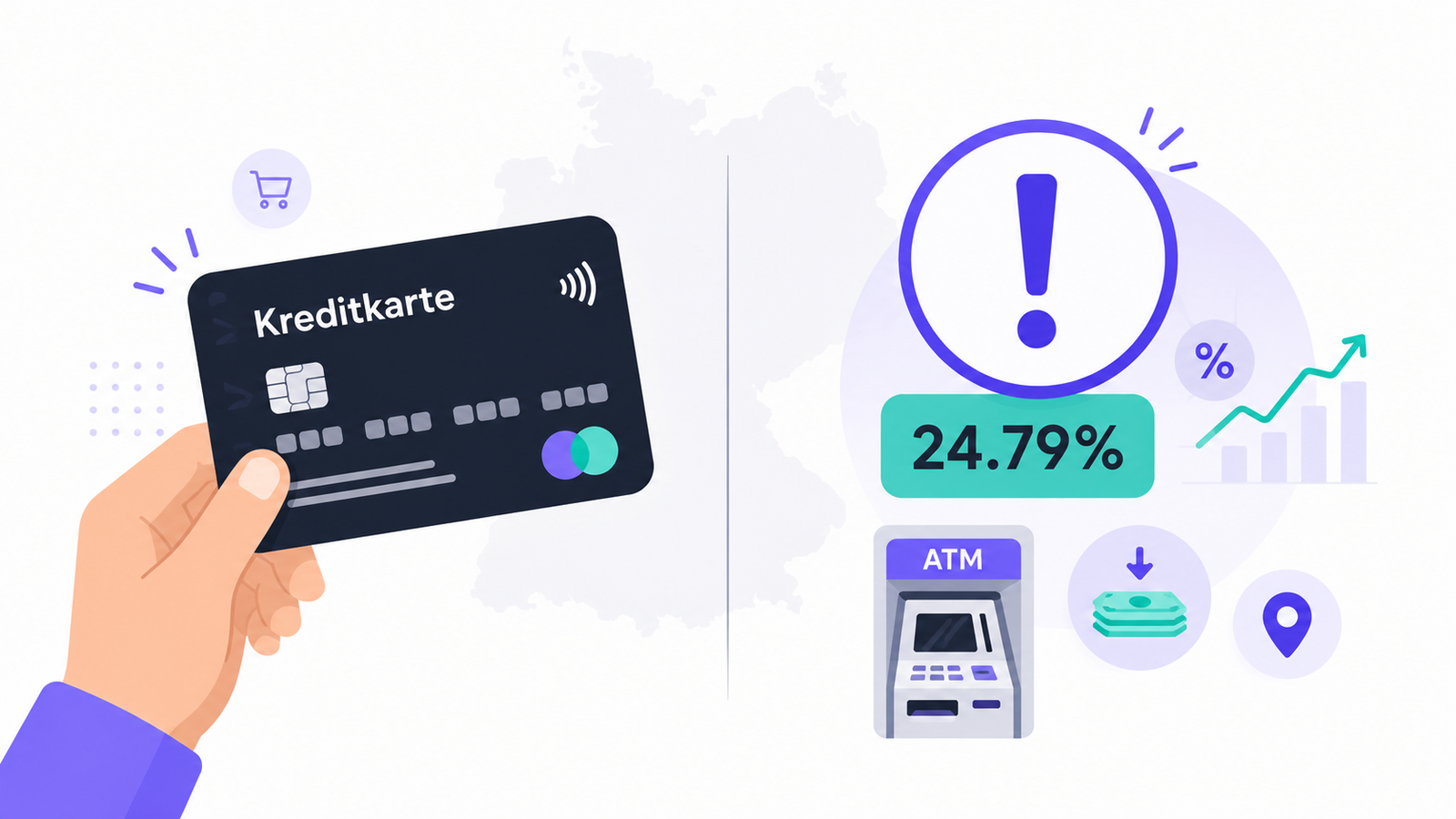
You arrive in Germany assuming a credit card is a credit card. Then a bank hands you a “Kreditkarte” that takes the full balance out of your account every month, your excellent credit score from home turns out to count for nothing, and the “free” card in your wallet quietly charges 24.79% the day you withdraw cash. The German system runs on debt aversion and fine print, and it punishes assumptions. Here are the six rules nobody explains at the border, with the 2026 numbers checked.
The short answer
German banking is built around one cultural fact: Germans dislike debt. The word for debt, “Schulden”, shares its root with “Schuld”, which means guilt, and the credit card market makes sense the moment you know that. Cards here mostly aren’t instruments for borrowing. They’re instruments for paying, with the borrowing part either removed entirely or priced to discourage you.
The practical consequences for a newcomer: the card your German bank calls a credit card probably takes the full balance monthly, the rewards culture you may know from the US barely exists, your credit history restarted at zero the day you landed, and the genuinely free travel cards come with interest traps that cost nothing to avoid once you know them and plenty if you don’t. The six truths below cover each one, then a decision guide puts them together.
The vocabulary
“Kreditkarte” covers four different card types. Knowing which one you’re holding is half the battle.
The gatekeeper
Schufa, Germany’s credit bureau, decides what you can get, and it has never heard of you.
The trap
“Free” cards earn their keep on interest: up to 24.79% effective, from day one on cash.
The fix
Right card, full repayment, weekday habits. German cards are cheap for the disciplined.
Truth #1: “credit card” doesn’t mean what you think it means
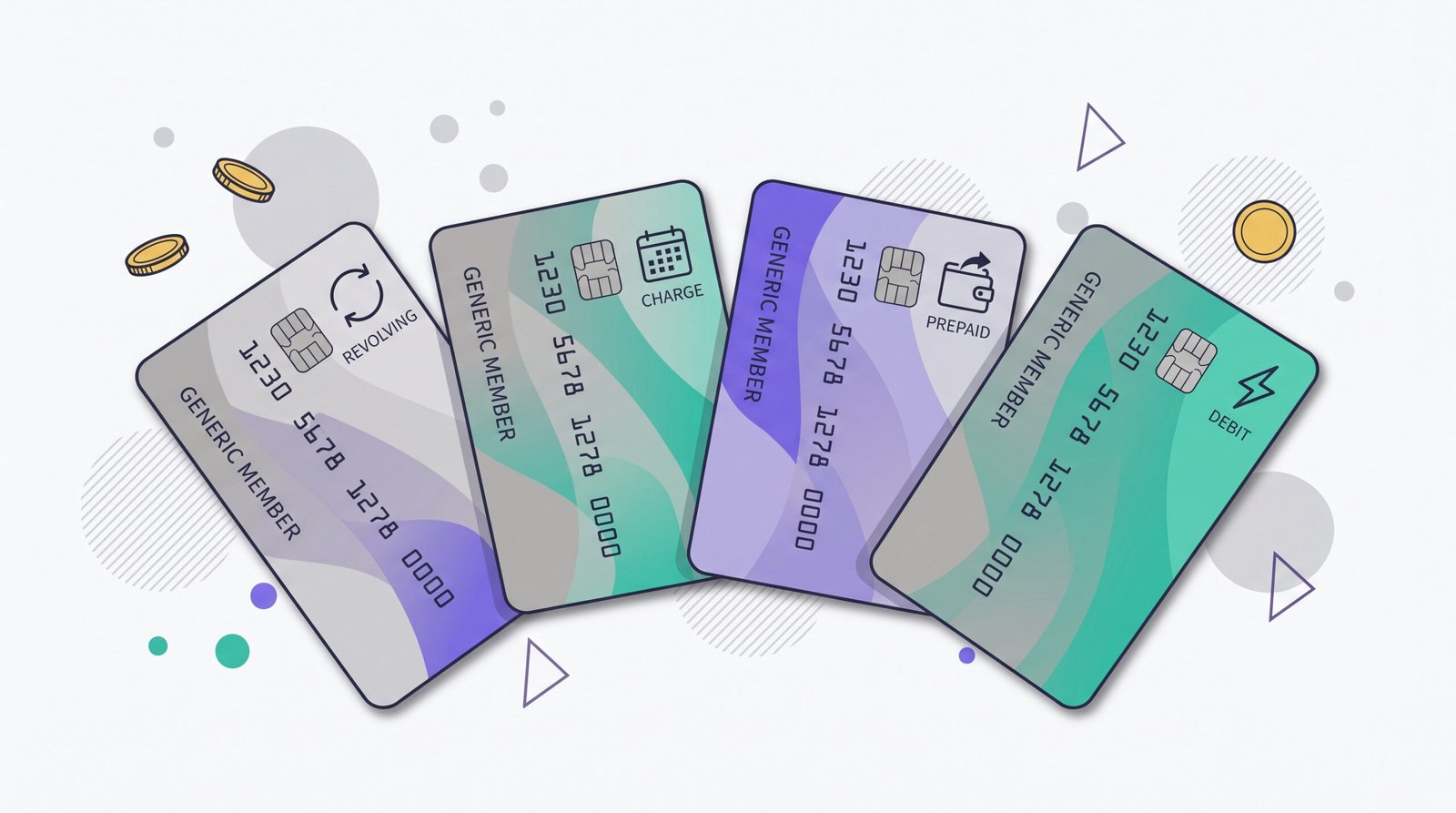
In Germany, “Kreditkarte” is an umbrella covering four different products, and most of the confusion expats report traces back to not knowing which one they were handed:
| Type | How it works | Can you carry debt? |
|---|---|---|
| Revolving card | A credit limit; repay in installments with interest. The “real” credit card in the US sense. | Yes, at 17–25% effective interest |
| Charge card | Spend during the month, the full balance leaves your bank account at cycle end. | No |
| Prepaid card | Load money first, spend what you loaded. | No |
| Debit card | Pulls from your Girokonto instantly at purchase. | No |
The card a traditional German bank issues under the name Kreditkarte is usually a charge card. It looks like a credit card, works like one at the hotel desk, and then collects every cent at the end of the billing cycle. If you were planning to spread a large purchase over a few months, the direct debit that empties your account on the 30th will come as news. Miss it repeatedly and the bank cancels the card rather than charging you interest, which tells you a lot about the local philosophy.
What most Germans actually pay with day to day is none of the above: it’s the girocard, the national debit scheme tied to your current account. And here 2023 added a twist that catches expats constantly. When Mastercard retired the Maestro system, banks began issuing debit cards branded Visa Debit or Debit Mastercard. They carry the logos, they work online, and to a newcomer they are indistinguishable from credit cards. They aren’t. Some hotels and car rental desks refuse them for deposits, and some smaller German shops that take girocard won’t take them at all. Check the small word “Debit” on the card face before assuming anything.
Truth #2: a “free” credit card is rarely free
“Dauerhaft kostenlos”, permanently free, is the most common phrase in German credit card advertising, and it’s technically true: no annual fee, often no foreign currency fee either. The business model lives elsewhere, in three places worth knowing by name.
Installment interest. The free revolving cards charge serious rates the moment you don’t repay in full. As of mid-2026, the TF Mastercard Gold runs an effective annual rate of 24.79%, the Hanseatic Bank GenialCard 17.29%, its sibling awa7 Visa 19.29%. Buy a 1,000 euro television on the TF card, pay only the minimum for one month, and you’ve spent around 18 euros just on interest for that single month. The zero on the annual fee is funded by people who carry balances. Don’t be the funding.
Cash withdrawal interest. This is the sneakiest one. The TF Mastercard Gold and Advanzia’s Gebührenfrei Mastercard Gold both advertise free cash withdrawals worldwide, and no withdrawal fee exists. Instead, interest starts running on the withdrawn amount from the day it leaves the machine, with no interest-free period: 24.79% effective at TF Bank, and at Advanzia 1.49% per month, which works out to roughly 19.4% a year. Neither card can hold a positive balance, and neither offers automatic direct debit repayment, so you must transfer money manually. Withdraw 200 euros, repay it by bank transfer the same week, and the cost is cents. Forget for two months, and your free card quietly became an expensive loan.
Foreign currency fees on ordinary bank cards. The travel-focused free cards skip them, but the standard card from your local Sparkasse or Volksbank typically adds 1 to 3 percent on every purchase outside the eurozone, occasionally more. Two weeks in Japan on the wrong card donates a dinner’s worth of money to your bank.
Truth #3: your foreign credit score means nothing here
Fifteen years of immaculate credit history in the US, UK, India or anywhere else transfers to Germany at an exchange rate of exactly zero. German lenders check one thing: your record at Schufa, the country’s dominant credit bureau, and Schufa has no window into foreign credit files. The day you register your address, you begin at nothing, and from a bank’s risk desk, “no history” sits uncomfortably close to “bad history”.
This is why fresh arrivals get rejected for cards their salary should easily qualify them for, and why the standard advice is to start with what doesn’t need a track record: your Girokonto’s debit card, a prepaid card, or an app-based account. Revolut, for instance, opens without any Schufa record at all, which makes it a useful bridge for the first months; my full Revolut review covers what its free plan does and doesn’t replace.
Building a Schufa file is unglamorous and mostly passive. Register your address (the Anmeldung), open a German bank account, put your name on contracts like the phone and electricity, pay everything on time, and let months pass. Two things actively help: staying at one address rather than hopping, and not scattering applications. Every hard credit application leaves a Schufa footprint, and five card applications in a week reads as desperation to the scoring model.
Two cards keep coming up in expat forums precisely because of this gap: the TF Mastercard Gold and the Gebührenfrei Mastercard Gold. Both are genuinely accessible to people with short German histories, and both are real revolving cards useful for hotel deposits and car rentals. One correction to the folklore, though: they do run a Schufa check. They’re lenient, not blind, and a fresh negative entry will still sink an application.
Truth #4: withdrawing cash can cost more in Berlin than in Bali
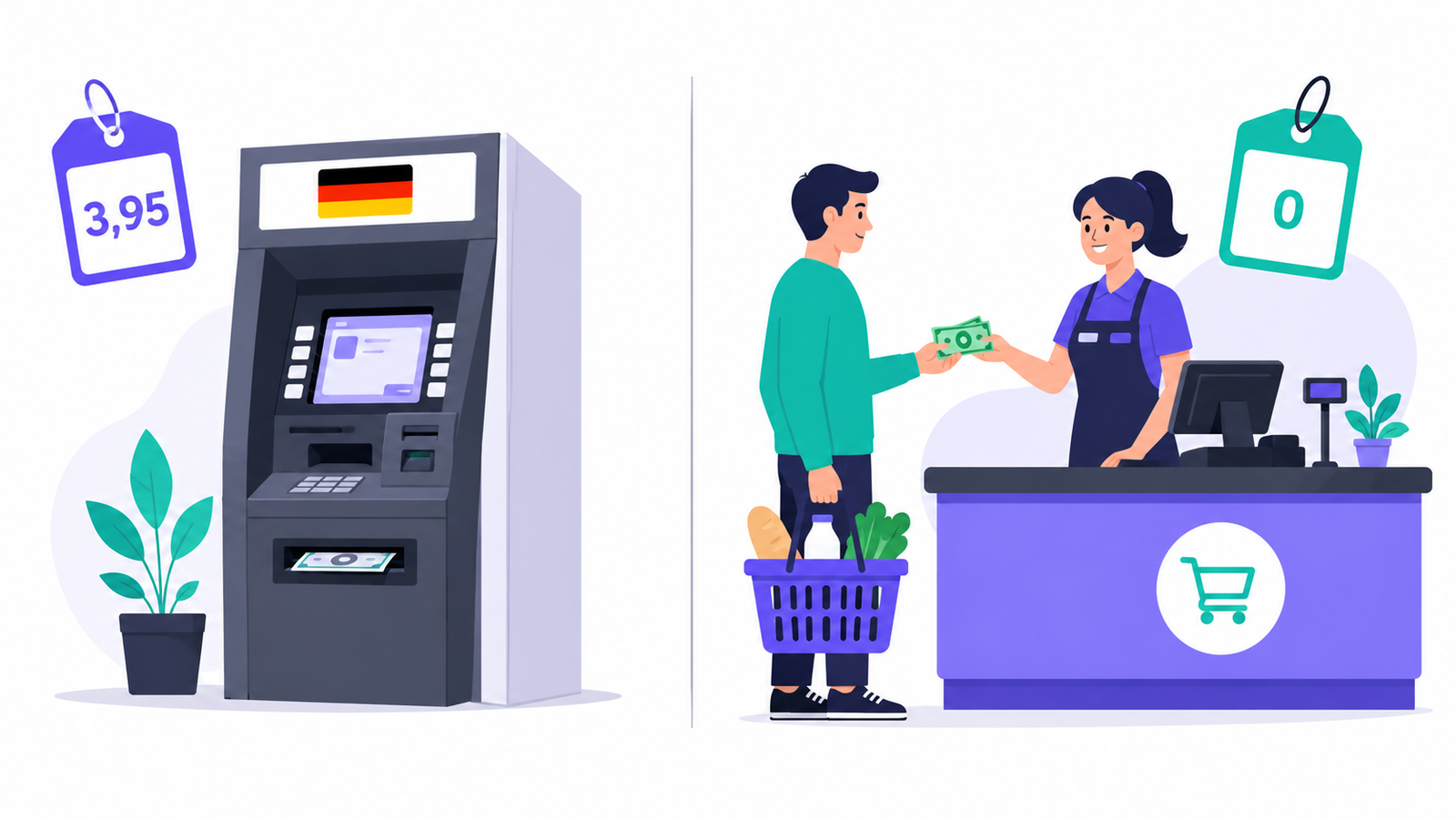
Here’s a rule that sounds like a typo until you read the fee schedule. The Hanseatic Bank GenialCard and the awa7 Visa, two of the most recommended free cards in Germany, let you withdraw cash at ATMs anywhere in the world for free. Anywhere, that is, except Germany. At a German ATM, both charge 3.95 euros per withdrawal. Free money in Denpasar, four euros in Düsseldorf.
The logic, once you see it, is almost elegant: German ATM operators charge card issuers steep interchange fees domestically, so the banks pass the domestic cost to you and eat the cheaper foreign one as a marketing perk. Knowing the quirk exists is most of the defense. The rest is the workaround.
The workaround: cash at the supermarket till. Through the Visa cash service (Bargeldservice), both cards dispense cash free of charge at the checkout of participating German retailers, among them Aldi Süd, dm, Rossmann, Netto, Müller, famila and REWE. You make a small purchase, ask for cash on top (“Ich würde gern Bargeld abheben”), and the register hands it over with your receipt. Most chains want a small minimum purchase, often around 5 to 10 euros, and there’s a per-transaction cash cap, but a pack of gum and 150 euros in twenties beats a 3.95 euro ATM fee every time. Germans use this service constantly with their girocards; with these Visa cards it works too, and almost no newcomer knows it.
One more Germany-specific habit to build regardless of card: this remains a country where the corner bakery, the flea market and a surprising number of restaurants still want cash, so you’ll be withdrawing more often than you did at home. Plan the how before the where.
Truth #5: don’t expect a points bonanza
If your mental model of credit cards includes sign-up bonuses worth a flight and 2% cash back on groceries, adjust it before you start comparing German cards, or the comparison will feel like a prank. Rewards here are thin, and the reason is regulation rather than stinginess: the EU’s Interchange Fee Regulation caps what card networks can charge merchants at 0.3% for credit cards and 0.2% for debit. US issuers fund their lavish points programs from interchange fees several times higher. Cap the fee and the points budget evaporates, which is why European cards compete on being free instead of being generous.
The exceptions live in predictable corners. Airline cards tied to Lufthansa’s Miles & More program (which also covers Eurowings) earn miles at rates frequent flyers can justify, for an annual fee. American Express runs Membership Rewards, the closest thing Germany has to a US-style points ecosystem, again mostly on fee-carrying cards. And a handful of free cards sprinkle niche cashback through partner shops and travel portals, worth a look and rarely worth choosing a card over.
The sober math for most expats: a free card with zero foreign currency fees saves you a guaranteed 1 to 3 percent on every purchase abroad, which quietly outearns most German rewards programs without asking you to chase anything. Treat points as a hobby for later, once your Schufa file is thick enough to make the premium cards attainable, and check a comparison from a consumer-side source like Finanztip’s free credit card guide before believing any bank’s own brochure.
Truth #6: American Express isn’t the globetrotter’s pass it is elsewhere
Amex occupies a strange position in Germany: prestigious, decent rewards, and routinely declined. The acceptance gap versus Visa and Mastercard is real and you’ll meet it within your first week, usually at a restaurant, a bakery chain or a mid-sized online shop. The cause is straightforward economics: American Express charges merchants more per transaction than its rivals, and German retailers, famously allergic to payment costs, respond by not taking it.
Acceptance has genuinely improved in the big cities and at anything touristy, so an Amex is far from useless. But the operating rule stands: in Germany, an American Express card is a second card. Carry a Visa or Mastercard as the one that always works, and let the Amex earn its points where it’s welcome. If you only have room in your life for a single card, this decides it.
The four cards from this article, side by side
The named cards, with their July 2026 conditions in one honest table. Terms change; treat this as a snapshot and verify on the issuer’s page before applying.
| Card | Annual fee | FX fee | Cash abroad | Cash in Germany | Effective interest | The gotcha |
|---|---|---|---|---|---|---|
| TF Mastercard Gold | 0 € | 0% | Free* | Free* | 24.79% | Interest on cash from day one; no auto direct debit, repay manually |
| Gebührenfrei Mastercard Gold (Advanzia) | 0 € | 0% | Free* | Free* | ~19.4% on cash | Same day-one interest on cash; account can’t hold a credit balance |
| Hanseatic GenialCard | 0 € | 0% | Free** | 3.95 € at ATMs; free at retail checkouts | 17.29% | Partial payment is the default; switch to 100% in the app |
| awa7 Visa | 0 € | 0% | Free** | 3.95 € at ATMs; free at retail checkouts | 19.29% | Same as GenialCard; plants trees, which is nice but not a fee policy |
So which card should you actually get?
Sequenced for a typical expat timeline, because the right answer changes as your Schufa file grows:
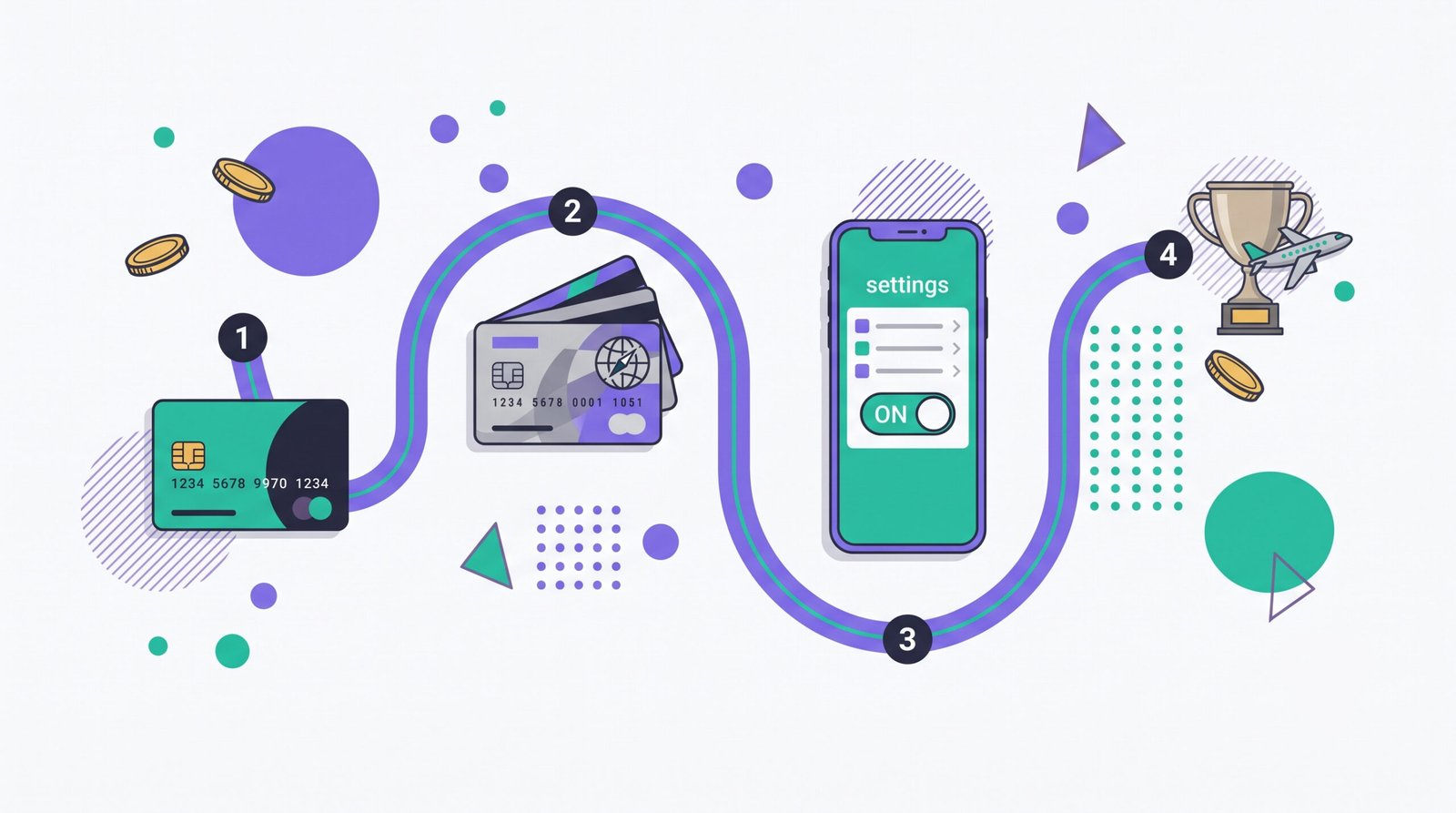
- Month one: your Girokonto’s debit card plus a no-Schufa app account. The debit card handles daily Germany; an app account covers online spending and anything international while you have no credit history to show. The pairing logic is the same two-account setup from our online vs traditional banks guide.
- Months two to six: one free travel card, applied for once. Pick a single card from the table above based on your habits: heavy cash user in Germany, lean toward the Gold cards and repay withdrawals instantly; card-payer and traveler, the GenialCard or awa7 with full repayment switched on. One application, not five.
- Immediately after it arrives: disarm it. Set repayment to 100% where the app allows it, or create the monthly transfer reminder where it doesn’t. Every horror story about these cards starts with skipping this step.
- Year one and beyond: rewards, if you still want them. With a seasoned Schufa file, the Miles & More and Amex doors open. By then you’ll know whether your spending actually justifies an annual fee, and the honest answer for most people is no.
We review individual cards and accounts as we test them in our financial product reviews, and the German market changes often enough that checking the date on any recommendation, including ours, is a habit worth keeping.
How the application actually works (and what they’ll ask for)
All four cards in this guide are applied for online in five to ten minutes, no branch visit, no account switch. What trips up expats is rarely the form. It’s the documents German issuers expect you to already have, so gather these first:
- A registered German address. Card issuers require residence in Germany, and that means a completed Anmeldung. The registration certificate (Meldebescheinigung) is the document your entire German paper life hangs from; if you haven’t done it yet, do it before thinking about cards.
- A valid passport or EU identity card, plus your residence permit if you’re from outside the EU. Some issuers hesitate when a permit has only a few months left on it, which is worth knowing before you take a rejection personally.
- A German bank account as the Referenzkonto. None of these cards replaces your Girokonto; they bill against it. The account can be at any German bank, including the online ones from our banking comparison.
- Regular income and a mobile number. You won’t usually upload payslips for the free cards, but you’ll declare income, and the number is where transaction confirmations and the 3-D Secure prompts land.
- Identity verification by VideoIdent or PostIdent. Either a short video call where you hold your ID to the camera, or a counter check at any Deutsche Post branch. Video takes ten minutes; the post office takes a queue.
- Then, the wait. Approval decisions often come within a day or two, and the physical card lands in your mailbox roughly one to two weeks later, activation letter sometimes separately, because Germany.
Apply for one card, wait for the outcome, and only then consider a second. Each application leaves a footprint at Schufa, and with a young file, restraint is the strongest credential you have.
Decode the fine print: six words that do all the damage
German fee schedules are actually well regulated and honest. They’re just honest in German. These six terms carry most of the meaning, and knowing them turns any card’s conditions page from a wall of text into a two-minute read:
| Term | What it means | Why you care |
|---|---|---|
Sollzins | The nominal interest rate | The advertised-looking number, always lower than the real one |
Effektiver Jahreszins | Effective annual rate, all costs included | The real number. Compare cards on this and nothing else |
Teilzahlung | Partial payment, i.e. installments | The setting that triggers interest; check whether it’s the default |
Verfügungsrahmen | Your credit limit | Set individually after the Schufa check; often modest at first and it grows |
Referenzkonto | The linked bank account | Where repayments come from, or where you must send them manually |
Bargeldservice | The retail cash-at-checkout service | Your free escape from the 3.95 € domestic ATM fee |
One habit worth copying from the locals: when a German reads a card offer, the eye goes to the effektiver Jahreszins first and the marketing claims last. Ten seconds, and most bad deals disqualify themselves.
FAQ
Can I get a credit card in Germany without a Schufa history?
Without any check, no; with a thin file, yes. The TF Mastercard Gold and Advanzia’s Gebührenfrei Mastercard Gold both query Schufa but are known for accepting newcomers with short German histories. Until then, debit and prepaid cards work without meaningful credit checks, and app accounts like Revolut open with no Schufa record at all.
Does my foreign credit score transfer to Germany?
No. Schufa has no access to foreign credit bureaus, so everyone starts at zero regardless of how pristine their record was at home. Registering your address, opening a German account and paying contracts on time builds the file; time does the rest.
What’s the difference between a charge card and a revolving card?
A charge card takes the full month’s spending from your bank account at cycle end, no balance carried, no interest. A revolving card lets you repay in installments at 17 to 25 percent effective interest in the current German market. The “Kreditkarte” from a traditional German bank is usually the charge kind.
Why do “free” cards charge interest when I withdraw cash?
Cards like the TF Mastercard Gold and Gebührenfrei Mastercard Gold have no withdrawal fee but start interest on cash from day one: 24.79% effective at TF Bank, roughly 19.4% at Advanzia as of mid-2026. Transfer the money back within days and the cost is cents; that manual transfer is the entire price of “free”.
Why was my application rejected?
For expats, usually one of: no Schufa history yet, an address registered only recently, income the bank can’t verify, a short residence permit, or several applications in quick succession. Check your free Schufa data copy, wait a few months, and apply for one card at a time. Rejections aren’t recorded as negative entries, but the application footprints add up.
Is American Express worth it in Germany?
As a rewards sidecar, often yes; Membership Rewards is the strongest points program in the market. As an only card, no, because too many German merchants decline it. Amex plus a free Visa or Mastercard is the working combination.
How do I check my Schufa record for free?
Request the free data copy (“Datenkopie nach Art. 15 DSGVO”) on Schufa’s website; EU law guarantees it. It shows the entries lenders see, and after any surprising rejection it’s the first document worth reading.
Which of these surprised you? Ask us the rest
A rejection you can’t explain, a card we should test next, or a fee that makes no sense: send it over. This guide gets updated from real questions, and the German card market gives us plenty of material.